An Extended SEIQR Model for Online Public Opinion Propagation: Modeling and Simulation
|
Xu Xinrong, Master's Candidate |
Received date: 2026-06-02
Online published: 2026-08-28
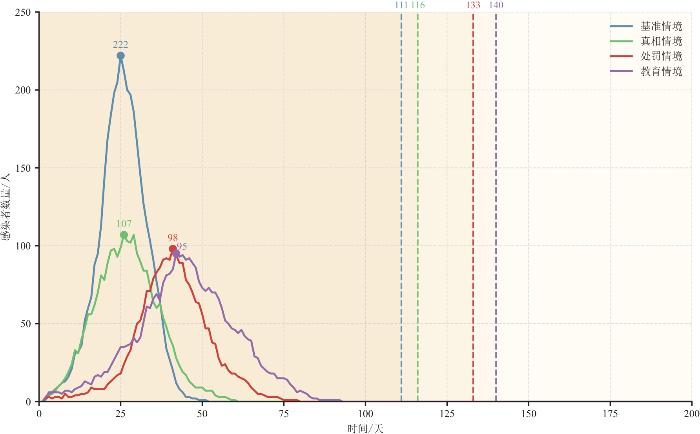
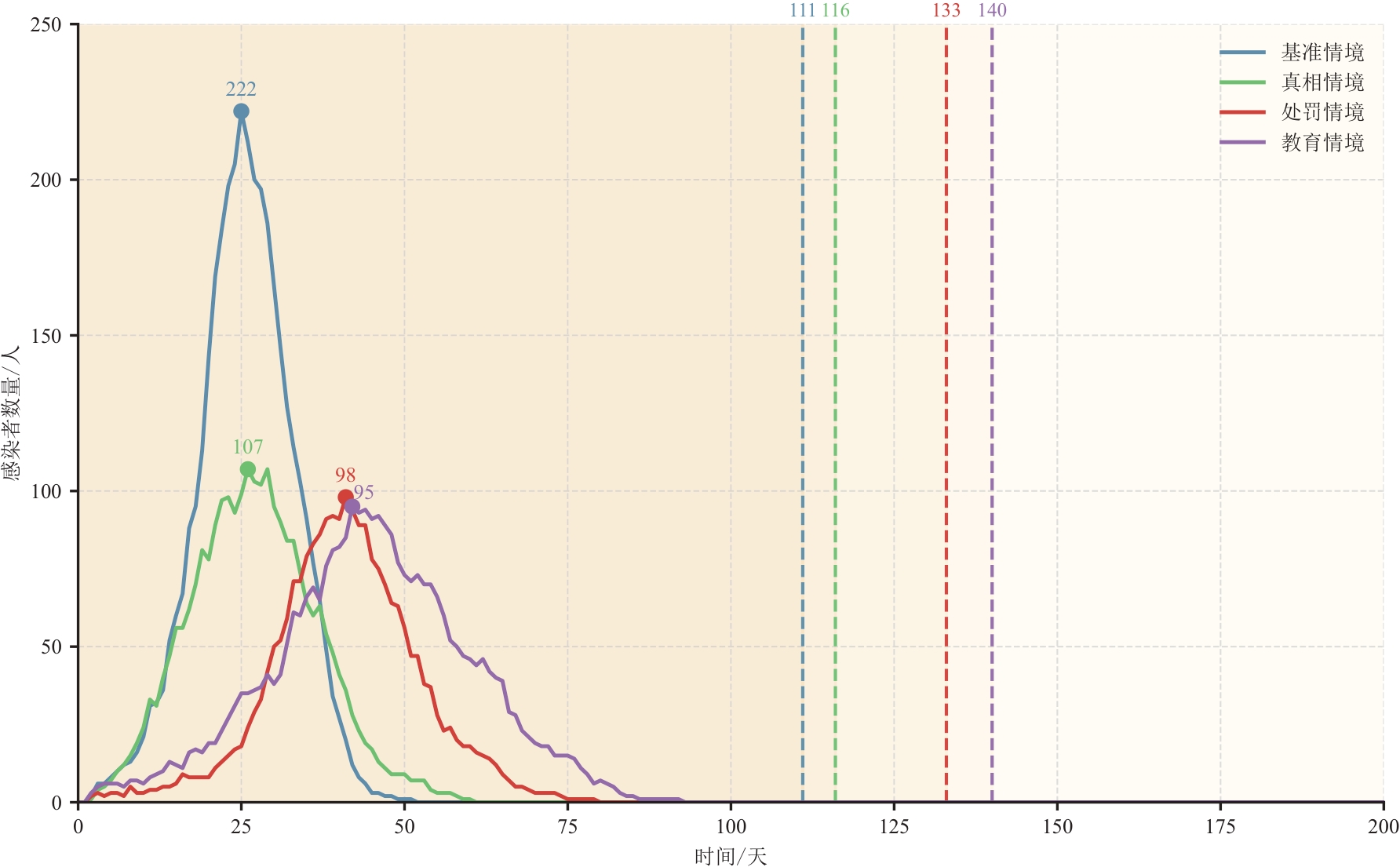
[Purpose/Significance] Online public opinion propagation poses a severe challenge to social stability and even national security. This study aims to establish an online public opinion propagation model that features both mechanistic interpretation and policy evaluation capability, thereby providing decision-making support for online public opinion governance and national security protection. [Method/Process] Based on the basic SEIQR model, this study reconfigured state transition rules and information diffusion patterns to develop an extended SEIQR model that better reflects real-world online public opinion propagation chains. An agent-based modeling (ABM) approach was then employed to reproduce the full-cycle dynamic process of online public opinion propagation at the micro-level of individual interactions. Furthermore, three categories of governance mechanisms—government disclosure of authoritative information, regulatory and platform-imposed account restrictions, and public education and guidance—were systematically simulated, and their intervention effects were comparatively analyzed using quantitative indicators. [Result/Conclusion] The results indicate that, compared with the baseline scenario, the infection peak size decreases sequentially across the “Truth”, “Penalty” and “Education” scenarios; meanwhile, the time at which the infection reaches its peak is progressively delayed, and the number of individuals who never enter the propagation chain sequentially increases. These findings indicate that the above mechanisms can reduce the infection peak, slow down the propagation speed, and narrow the scope of influence to varying degrees by affecting the state-transition process of online users. However, the propagation cycle is extended under all three scenarios, indicating that the propagation chain exhibits a certain degree of a “long-tail effect” under policy interventions. This study identifies the evolutionary patterns of online public opinion under different governance strategies, providing quantitative support for predicting public opinion development trends, optimizing the timing of policy interventions, and scientifically evaluating governance strategies. The findings offer significant theoretical contributions and practical value for fostering a clean and healthy online environment and safeguarding national security and social stability.
Xu Xinrong , Wang Ming . An Extended SEIQR Model for Online Public Opinion Propagation: Modeling and Simulation[J]. Knowledge Management Forum, 2026 , 11(4) : 381 -399 . DOI: 10.13266/j.issn.2095-5472.2026.032
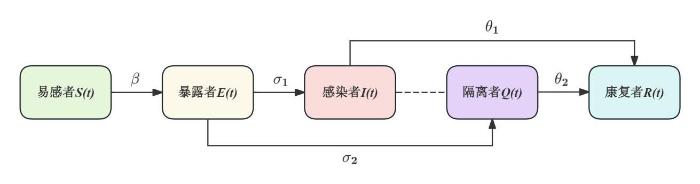
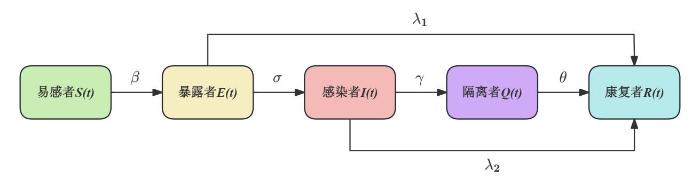
表1 改进SEIQR模型在网络舆情传播情境下的群体及参数含义Table 1 Definitions of groups and parameters in the extended SEIQR model for online public opinion propagation |
| 群体/参数 | 定义 | 含义 |
|---|---|---|
| N | 总人数 | 与网络舆情有关的总网民数量 |
| S | 易感者 | 未接触网络舆情信息的网民群体 |
| E | 暴露者 | 已接触网络舆情信息的网民群体 |
| I | 感染者 | 传播网络舆情的网民群体 |
| Q | 隔离者 | 被管控而无法传播网络舆情的网民群体 |
| R | 康复者 | 进入终态、不再参与本轮网络舆情传播的网民群体 |
| β | 感染率 | 易感者S转变为暴露者E的概率 |
| σ | 发病率 | 暴露者E转变为感染者I的概率 |
| γ | 禁止率 | 感染者I被管控并转变为隔离者Q的概率 |
| θ | 康复率 | 隔离者Q转变为康复者R的概率 |
| λ 1 | 冷静率 | 暴露者E转变为康复者R的概率 |
| λ 2 | 冷静率 | 感染者I转变为康复者R的概率 |
表2 改进SEIQR模型仿真参数原始设置Table 2 Initial simulation parameter settings of the extended SEIQR model |
| 参数 | 数值 |
|---|---|
| 总人数N | 1 000 |
| 初始暴露者数E 0 | 10 |
| 感染率β | 0.05 |
| 发病率σ | 0.5 |
| 禁止率γ | 0.2 |
| 冷静率λ 1 | 0.5 |
| 冷静率λ 2 | 0.05 |
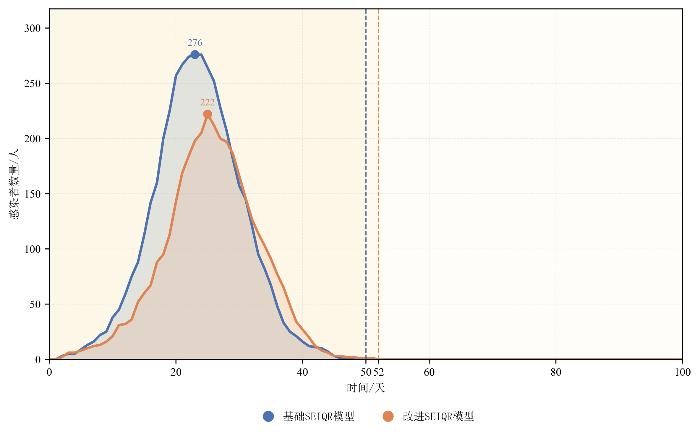
图4 基础SEIQR模型与改进SEIQR模型感染者数量变化对比Figure 4 Comparison of infected user dynamics between the basic and extended SEIQR models |
表3 基础SEIQR模型与改进SEIQR模型传播特征比较Table 3 Comparison of propagation characteristics between the basic and extended SEIQR models |
| 传播特征/单位 | 基础SEIQR模型 | 改进SEIQR模型 |
|---|---|---|
| 感染者峰值数量IPS/人 | 276 | 222 |
| 感染者峰值出现时间/日 | 23 | 25 |
| 感染者清零时间/日 | 50 | 52 |
| 舆情传播周期T/日 | 88 | 111 |
| 舆情影响总人数AP/人 | 995 | 975 |
表4 基础SEIQR模型与改进SEIQR模型对网络舆情传播过程的刻画能力比较Table 4 Comparison of capabilities in characterizing online public opinion propagation between the basic and extended SEIQR models |
| 现实传播行为或场景 | 基础SEIQR模型的局限 | 改进SEIQR模型的优化 | 具体优化路径/参数 |
|---|---|---|---|
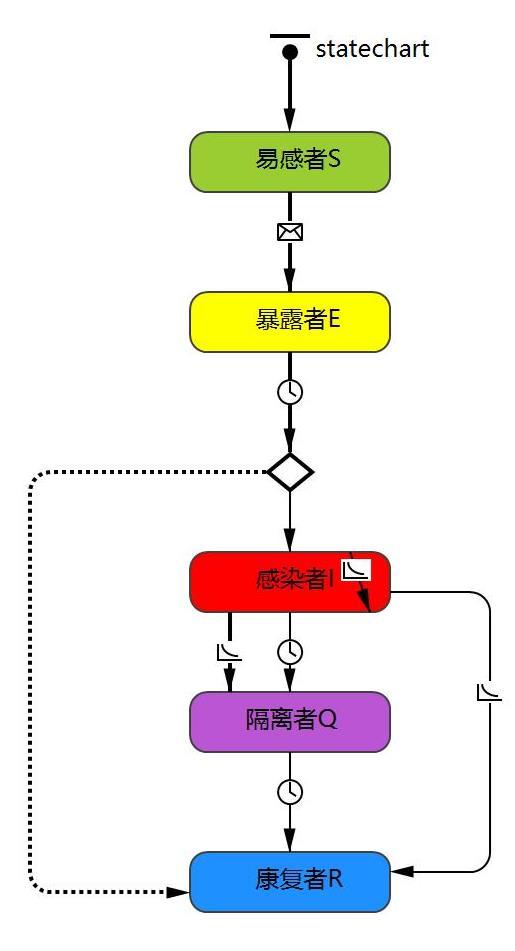
| 用户接触信息后的 行为选择 | 未设置“接触信息但不传播”路径,暴露者只能向感染者或隔离者转化 | 增加了暴露者在接触信息后不扩散、不传播,直接转化为康复者的路径 | E→R,冷静率λ 1 |
| 针对舆情传播进行 隔离管控 | 隔离管控作用于暴露阶段,即部分接触信息、尚未传播的暴露者被识别、禁言或封禁 | 隔离管控作用于感染阶段,即部分已传播信息的感染者被识别、禁言或封禁 | I→Q,禁止率γ |
| 用户在传播过程中 自主退出 | 感染者在传播期中自然康复,未设置感染者主动退出传播过程的路径 | 增加了感染者因信息引导、认知转变等因素停止传播并转化为康复者的路径 | I→R,冷静率λ 2 |
| 不同治理机制介入 舆情管控 | 仅体现“隔离”机制,对治理政策的刻画相对单一 | 可分别通过冷静率、禁止率和感染率变化刻画多种治理情境 | λ 1、λ 2、γ、β |
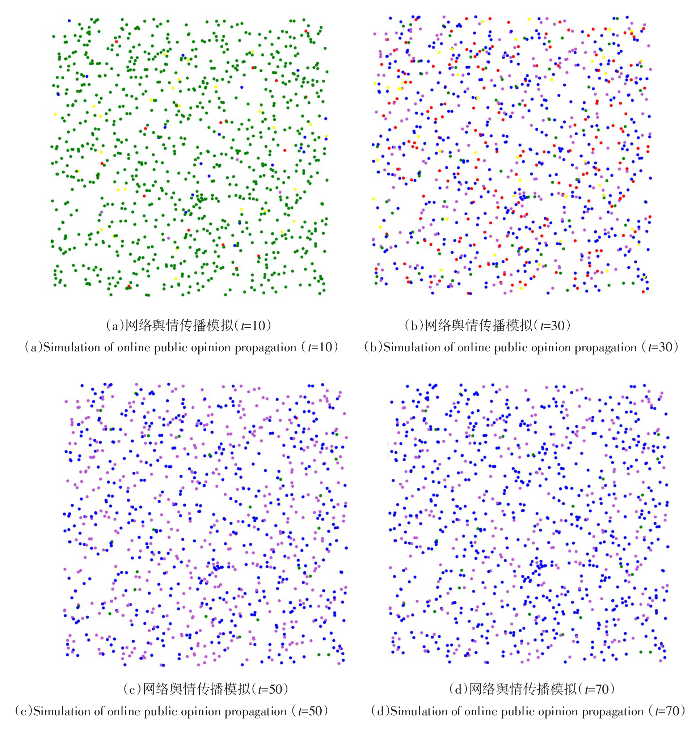
图5 改进SEIQR模型网络舆情传播模拟的时刻快照(基准情境)Figure 5 Temporal snapshots of online public opinion propagation in the extended SEIQR model (baseline scenario) |
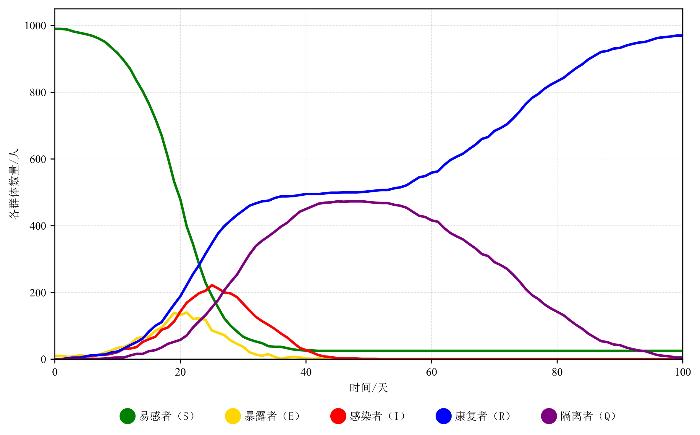
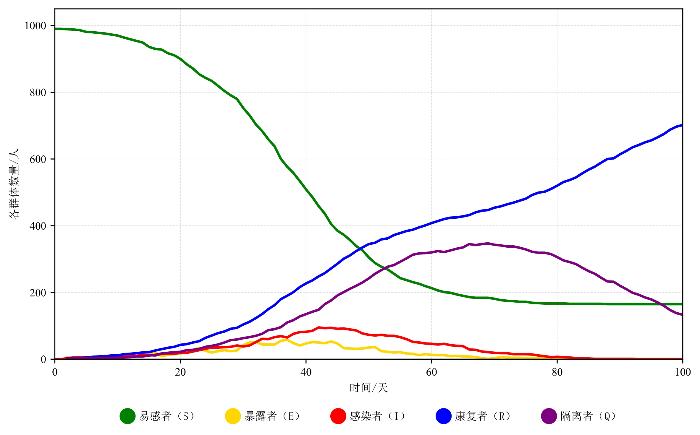
图6 改进SEIQR模型中各类网络用户数量变化曲线(基准情境)Figure 6 Temporal evolution of different user groups in the extended SEIQR model (baseline scenario) |
表5 改进SEIQR模型中各类网络用户数量的关键状态(基准情境)Table 5 Key states of different user groups in the extended SEIQR model (baseline scenario) |
| 时间/天 | 易感者S/人 | 暴露者E/人 | 感染者I/人 | 康复者R/人 | 隔离者Q/人 |
|---|---|---|---|---|---|
| 1 | 990 | 10 | 0 | 0 | 0 |
| 2 | 988 | 7 | 2 | 3 | 0 |
| 25 | 190 | 86 | 222 | 347 | 155 |
| 44 | 25 | 0 | 6 | 499 | 470 |
| 52 | 25 | 0 | 0 | 507 | 468 |
| 111 | 25 | 0 | 0 | 975 | 0 |
| …… | …… | …… | …… | …… | …… |
| 150 | 25 | 0 | 0 | 975 | 0 |
表6 网络舆情治理对策与改进SEIQR模型参数的关系映射Table 6 Mapping between online public opinion governance strategies and parameters of the extended SEIQR model |
| 网络舆情治理对策 | 对应模型参数 | 参数调整策略 | 现实情境含义 |
|---|---|---|---|
| 政府公布事件全貌 (真相机制) | 冷静率λ 1 冷静率λ 2 | 等比例提高, 保证λ 1>λ 2 | 提高权威信息发布、事实情况说明与辟谣回应的力度与时效 |
| 监管部门封禁措施 (处罚机制) | 禁止率γ | 提高 | 对恶意用户、不实内容与异常传播行为进行监测、识别与封禁 |
| 社会环境宣传教育 (教育机制) | 感染率β | 降低 | 通过社会宣传与引导提升公众信息甄别能力与审慎传播意识 |
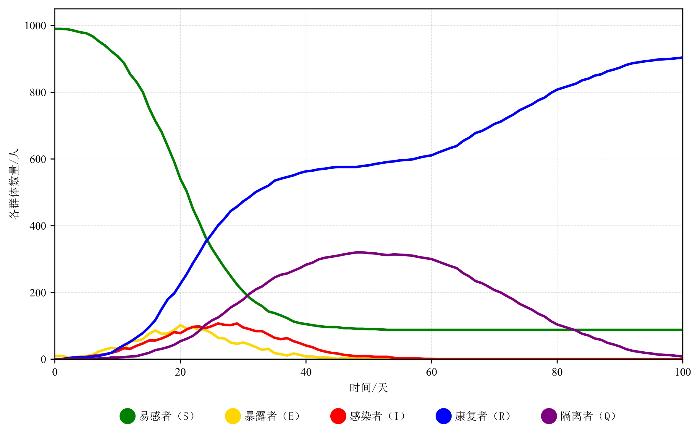
图7 改进SEIQR模型中各类网络用户数量变化曲线(真相情境)Figure 7 Temporal evolution of different user groups in the extended SEIQR model (truth scenario) |
表7 改进SEIQR模型中各类网络用户数量的关键状态(真相情境)Table 7 Key states of different user groups in the extended SEIQR model (truth scenario) |
| 时间/天 | 易感者S/人 | 暴露者E/人 | 感染者I/人 | 康复者R/人 | 隔离者Q/人 |
|---|---|---|---|---|---|
| 1 | 990 | 10 | 0 | 0 | 0 |
| 2 | 989 | 6 | 1 | 3 | 1 |
| 26 | 303 | 64 | 107 | 401 | 125 |
| 55 | 88 | 0 | 3 | 596 | 313 |
| 61 | 88 | 0 | 0 | 619 | 293 |
| 116 | 88 | 0 | 0 | 912 | 0 |
| …… | …… | …… | …… | …… | …… |
| 150 | 88 | 0 | 0 | 912 | 0 |
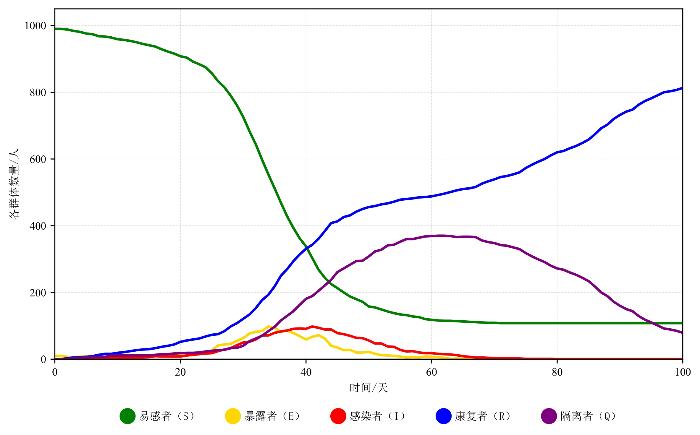
图8 改进SEIQR模型中各类网络用户数量变化曲线(处罚情境)Figure 8 Temporal evolution of different user groups in the extended SEIQR model (penalty scenario) |
表8 改进SEIQR模型中各类网络用户数量的关键状态(处罚情境)Table 8 Key states of different user groups in the extended SEIQR model (penalty scenario) |
| 时间/天 | 易感者S/人 | 暴露者E/人 | 感染者I/人 | 康复者R/人 | 隔离者Q/人 |
|---|---|---|---|---|---|
| 1 | 990 | 10 | 0 | 0 | 0 |
| 2 | 988 | 7 | 2 | 3 | 0 |
| 41 | 303 | 67 | 98 | 343 | 189 |
| 72 | 108 | 0 | 3 | 549 | 340 |
| 80 | 108 | 0 | 0 | 620 | 272 |
| 133 | 108 | 0 | 0 | 892 | 0 |
| …… | …… | …… | …… | …… | …… |
| 150 | 108 | 0 | 0 | 892 | 0 |
图9 改进SEIQR模型中各类网络用户数量变化曲线(教育情境)Figure 9 Temporal evolution of different user groups in the extended SEIQR model (education scenario) |
表9 改进SEIQR模型中各类网络用户数量的关键状态(教育情境)Table 9 Key states of different user groups in the extended SEIQR model (education scenario) |
| 时间/天 | 易感者S/人 | 暴露者E/人 | 感染者I/人 | 康复者R/人 | 隔离者Q/人 |
|---|---|---|---|---|---|
| 1 | 990 | 10 | 0 | 0 | 0 |
| 2 | 989 | 6 | 3 | 2 | 0 |
| 42 | 459 | 50 | 95 | 248 | 148 |
| 89 | 165 | 0 | 1 | 602 | 232 |
| 93 | 165 | 0 | 0 | 642 | 193 |
| 140 | 165 | 0 | 0 | 835 | 0 |
| …… | …… | …… | …… | …… | …… |
| 150 | 165 | 0 | 0 | 835 | 0 |
| [1] |
中国互联网络信息中心. 第57 次中国互联网络发展状况统计报告[EB/OL]. [2026-06-10].
China Internet Network Information Center (CNNIC). The 57th statistical report on internet development in China[EB/OL]. [2026-06-10].
|
| [2] |
|
| [3] |
谭娟. 基于传染病模型的社交网络舆情话题传播[J]. 计算机工程与应用, 2015, 51(12): 118-122.
|
| [4] |
丁学君. 基于SIR的SNS网络舆情话题传播模型研究[J]. 计算机仿真, 2015, 32(1): 241-247.
|
| [5] |
赵剑华, 万克文. 基于信息传播模型-SIR传染病模型的社交网络舆情传播动力学模型研究[J]. 情报科学, 2017, 35(12): 34-38.
|
| [6] |
|
| [7] |
|
| [8] |
|
| [9] |
|
| [10] |
|
| [11] |
|
| [12] |
陈帅, 司光亚, 王艳正. 基于SEI3R的微信舆情演化模型[J]. 信息工程大学学报, 2021, 22(2): 222-227, 240.
|
| [13] |
畅雅雯, 杨波, 高玥琳, 等. 基于SEIR的微信公众号信息传播建模与分析[J]. 计算机科学, 2022, 49(4): 56-66.
|
| [14] |
魏静, 黄阳江豪, 林萍, 等. 基于改进SIR模型的微博网络舆情传播研究[J]. 情报科学, 2019, 37(6): 16-22.
|
| [15] |
王筱莉, 张静, 赵来军, 等. 基于改进SEIR模型的微博舆情衍生话题传播研究[J]. 信息资源管理学报, 2022, 12(4): 95-104, 120.
|
| [16] |
|
| [17] |
|
| [18] |
|
| [19] |
|
| [20] |
|
| [21] |
|
| [22] |
|
| [23] |
|
| [24] |
胡凯茜, 李欣, 刘明帅. 演化视角下的网络暴力治理研究——基于SEIQR模型[J]. 情报杂志, 2025, 44(1): 146-154.
|
| [25] |
|
| [26] |
|
| [27] |
|
| [28] |
|
| [29] |
彭榕. 网络谣言与公共秩序——基于“长尾理论”的观察视角[J]. 学术交流, 2018(6): 120-125.
|
| [30] |
中华人民共和国公安部. 2025年“净网”“护网”专项工作部署会召开[EB/OL]. [2026-06-12].
Ministry of Public Security of the People's Republic of China. Meeting on “Clean Net” and “Protect Net” special campaign in 2025[EB/OL]. [2026-06-12].
|
| [31] |
中国互联网联合辟谣平台. 面对谣言: 勿听!勿言!多思![EB/OL]. [2026-06-12].
China Internet Joint Platform for Refuting Rumors. Facing rumors: do not listen, do not spread, think more![EB/OL]. [2026-06-12].
|
| [32] |
澎湃新闻. 造谣会封号!中央网信办通报首发谣言典型案例, 5400余个账号被处置[EB/OL]. [2026-06-15].
|
| [33] |
|
| [34] |
|
| [35] |
|
| [36] |
国务院国有资产监督管理委员会. 中盐集团关于保障食盐市场供应的声明[EB/OL]. [2026-06-18].
State-owned Assets Supervision and Administration Commission of the State Council. Statement by China Salt Group on ensuring the supply of the salt market[EB/OL]. [2026-06-18].
|
| [37] |
央视网. 中国消费者协会消费提示: 谨慎对待 无需抢购[EB/OL]. [2026-06-18].
|
| [38] |
腾讯网. 辟谣工作室 | 日本核污染水排海后, 第一波谣言已被辟谣[EB/OL]. [2026-06-18].
|
/
| 〈 |
|
〉 |