Measuring International Scientific Collaboration of Interdisciplinary Sciences from the Perspective of Different Collaboration Models
|
Yu Yunlong, Assistant Research Fellow, PhD; |
|
Ye Yi, Master’s Candidate; |
|
Qiu Junping, Professor. |
Received date: 2026-06-06
Online published: 2026-08-27
Supported by
special fund for basic research in higher education institutions of research project of Zhejiang Federation of Humanities and Social Sciences titled “Measurement of international research collaboration based on Theory of Asymmetric Interdependence”(26NDJC040YBMS)
youth project of National Natural Science Foundation of China titled “Synergistic Evolution Mechanism and Path Optimization of Multiple Actors in Digital Innovation: Based on the Perspective of Social Experiments”(72404074)
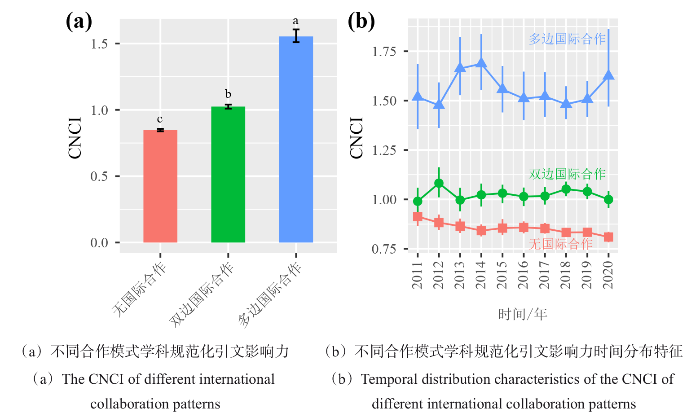
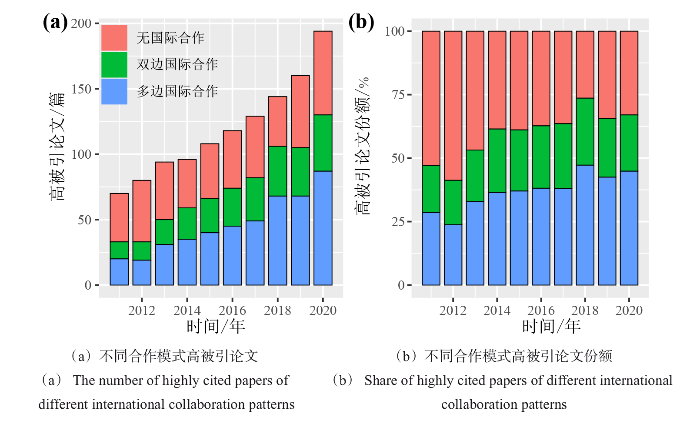
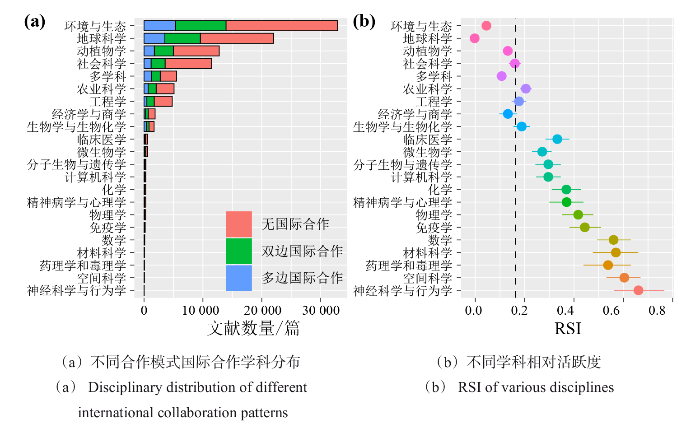
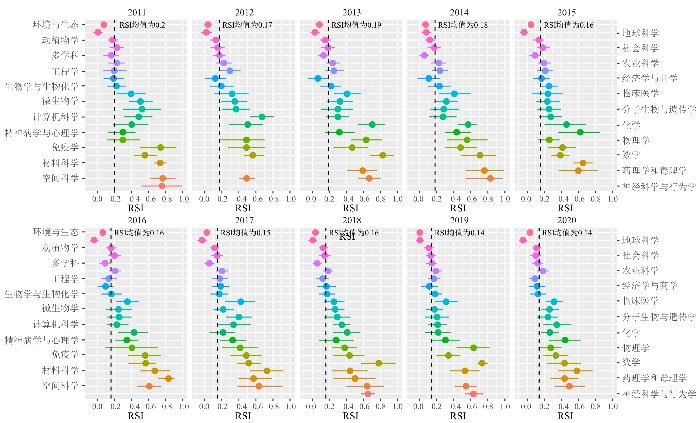
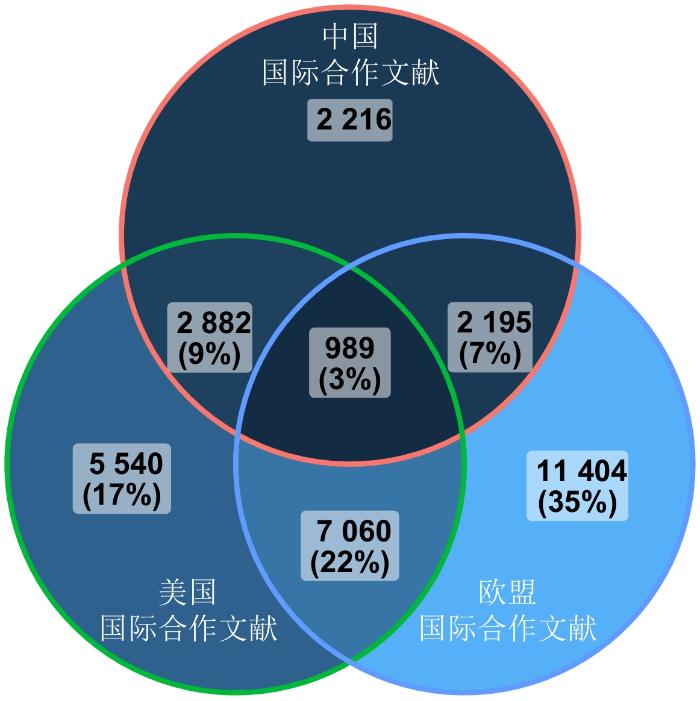
[Purpose/Significance] Increasing in interdisciplinary science and international cooperation to solve global complex problems, existing research lacks an integrated framework for measuring the trends of interdisciplinary international scientific collaboration that incorporates multi-dimensional indicators and distinguishes different collaboration patterns. [Method/Process] This study differentiated three collaboration patterns, including no international cooperation, bilateral international cooperation, and multilateral international cooperation. It integrated intensity, breadth, impact, and disciplinary diversity of international collaboration to construct a measurement indicator system for interdisciplinary international scientific collaboration trends. An empirical analysis was conducted using the field of climate change as a case study. [Result/Conclusion] The findings reveal that the intensity and breadth of international collaboration of global climate change research have continued to grow, however, the growth trend has significantly slowed down after 2017, with a decline in collaboration intensity between China and U.S. Multilateral international collaboration significantly enhances academic influence (average CNCI of 1.55), far exceeding bilateral international cooperation (1.02) and no international cooperation (0.85). Core disciplines (Environmental & Ecological Sciences, Earth & Planetary Sciences) in the field of climate change have high international collaborative publication volumes but relatively low collaborative activity levels (RSI values of -0.003 and 0.05, respectively). International collaborations of both Sino-U.S. and Sino-European are China-led with uneven disciplinary distributions. Based on these findings, we propose targeted policy recommendations in four areas: establishing long-term and stable collaboration mechanisms, prioritizing support for multilateral collaboration, implementing differentiated disciplinary strategies, and optimizing regional layouts.
Yu Yunlong , Ye Yi , Yue Xiaoxu , Qiu Junping . Measuring International Scientific Collaboration of Interdisciplinary Sciences from the Perspective of Different Collaboration Models[J]. Knowledge Management Forum, 2026 , 11(4) : 366 -380 . DOI: 10.13266/j.issn.2095-5472.2026.031
表1 交叉科学国际科研合作态势测度指标Table 1 Indicators for measuring the evolution of interdisciplinary sciences international scientific collaboration |
| 一级指标 | 二级指标 | 具体测度 |
|---|---|---|
| 国际合作强度 | 合作文献数量(ND) | 不同合作模式文献产出的数量 |
| 合作文献份额(SD) | 不同合作模式下文献数量占总文献数量的比例 | |
| 合作文献份额增速指标(IRSD) | 参考环比增长速度概念,计算每年与前一年文献份额增量与前一年文献份额之比,说明逐年文献产出的发展程度,预测未来发展趋势 | |
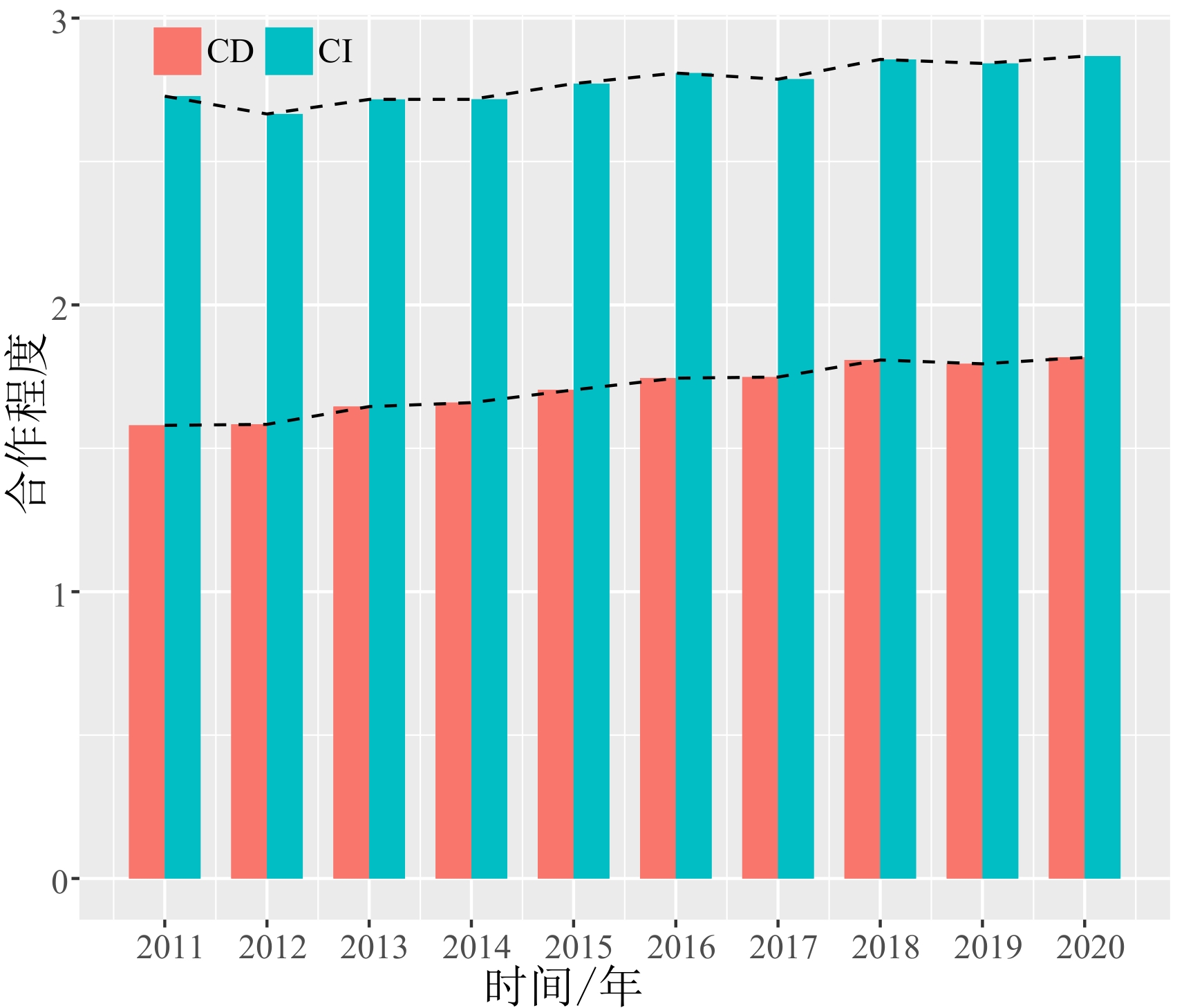
| 国际合作广度 | 合作程度(CD) | 平均每篇论文的国家数量 |
| 合作指数(CI) | 平均每篇多作者合著论文的国家数量 | |
| 国际合作影响力 | 学科规范化引文影响力(CNCI) | 一篇文献被引次数与同一年、同一学科、同一文献类型的被引次数的比值 |
| 高被引论文数量(NHCD) | 数据集中被引次数在同年同学科文献中排名前1%的文献数量 | |
| 高被引论文份额(SHCD) | 不同合作模式高被引论文占总高被引论文的百分比 | |
| 国际合作学科多样性 | 不同学科文献数量(NDC) | 不同合作模式不同学科文献产出的数量 |
| 学科国际合作相对活跃度(RSI) | 某一特定时间某国家的学科国际合作相对活跃程度 |
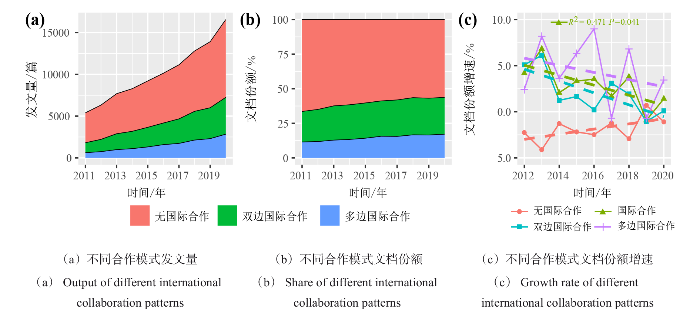
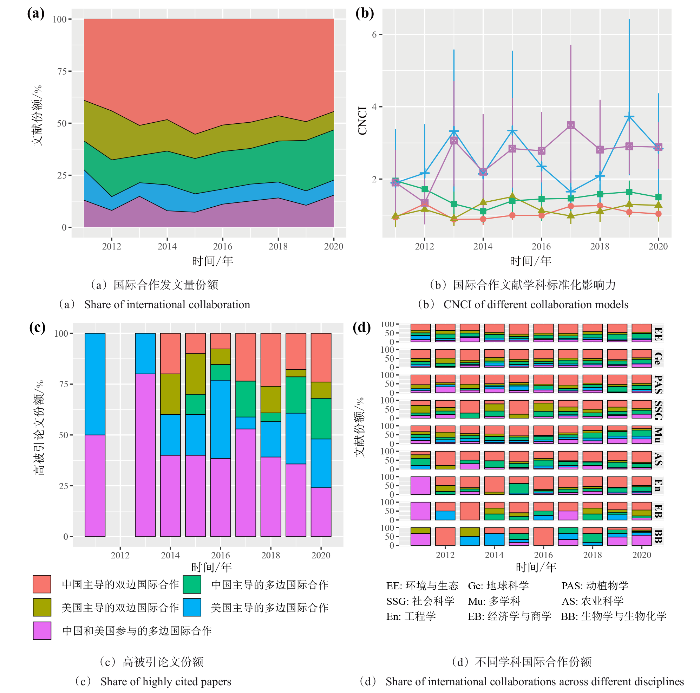
图6 不同合作模式下全球气候变化国际合作产出与学科相对活跃度Figure 6 Output and RSI of international collaboration of global climate change of different international collaboration patterns |
表2 2011—2020年中美气候变化国际合作文献分布 (篇)Table 2 Outputs of international collaboration of China or U.S. in the field of climate change, 2011-2020 |
| 合作模式 | 2011 | 2012 | 2013 | 2014 | 2015 | 2016 | 2017 | 2018 | 2019 | 2020 | 共计 |
|---|---|---|---|---|---|---|---|---|---|---|---|
| 中国主导的双边国际合作 | 48 | 60 | 117 | 128 | 176 | 197 | 220 | 267 | 313 | 337 | 1 863 |
| 美国主导的双边国际合作 | 24 | 32 | 33 | 40 | 37 | 49 | 56 | 70 | 57 | 67 | 465 |
| 中国主导的多边国际合作 | 17 | 24 | 30 | 43 | 54 | 70 | 76 | 113 | 154 | 183 | 764 |
| 美国主导的多边国际合作 | 18 | 9 | 15 | 33 | 28 | 28 | 36 | 44 | 44 | 55 | 310 |
| 中美参与的多边国际合作 | 16 | 11 | 34 | 21 | 23 | 43 | 56 | 81 | 67 | 117 | 469 |
| 共计 | 123 | 136 | 229 | 265 | 318 | 387 | 444 | 575 | 635 | 759 | 3 871 |
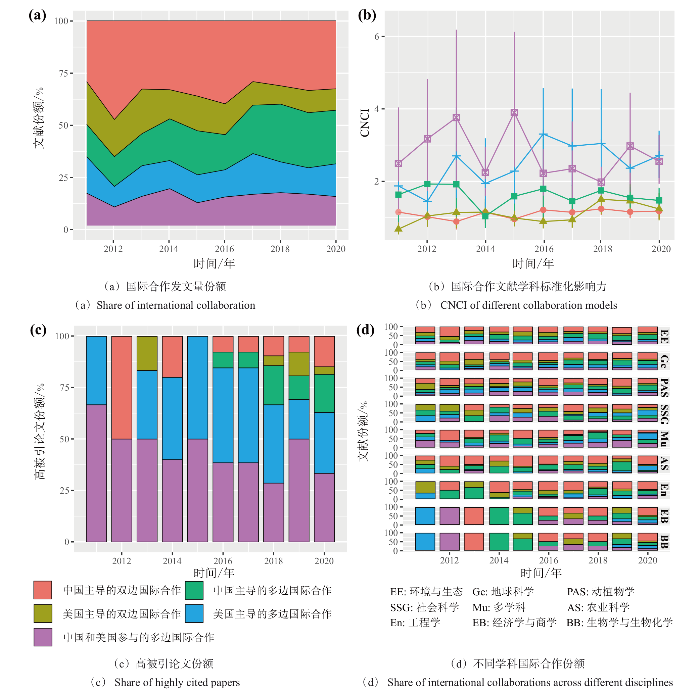
表3 2011—2020年中欧气候变化国际合作文献分布 (篇)Table 3 Outputs of International collaboration of China or EU in the field of climate change, 2011-2020 |
| 合作模式 | 2011 | 2012 | 2013 | 2014 | 2015 | 2016 | 2017 | 2018 | 2019 | 2020 | 共计 |
|---|---|---|---|---|---|---|---|---|---|---|---|
| 中国主导的双边国际合作 | 30 | 53 | 49 | 71 | 89 | 116 | 103 | 152 | 182 | 241 | 1 086 |
| 美国主导的双边国际合作 | 21 | 20 | 32 | 30 | 41 | 43 | 40 | 43 | 58 | 76 | 404 |
| 中国主导的多边国际合作 | 16 | 16 | 23 | 43 | 52 | 49 | 82 | 135 | 144 | 190 | 750 |
| 美国主导的多边国际合作 | 18 | 11 | 22 | 29 | 33 | 38 | 69 | 72 | 69 | 116 | 477 |
| 中美参与的多边国际合作 | 16 | 10 | 21 | 38 | 27 | 40 | 53 | 77 | 82 | 103 | 467 |
| 共计 | 101 | 110 | 147 | 211 | 242 | 286 | 347 | 479 | 535 | 726 | 3 184 |
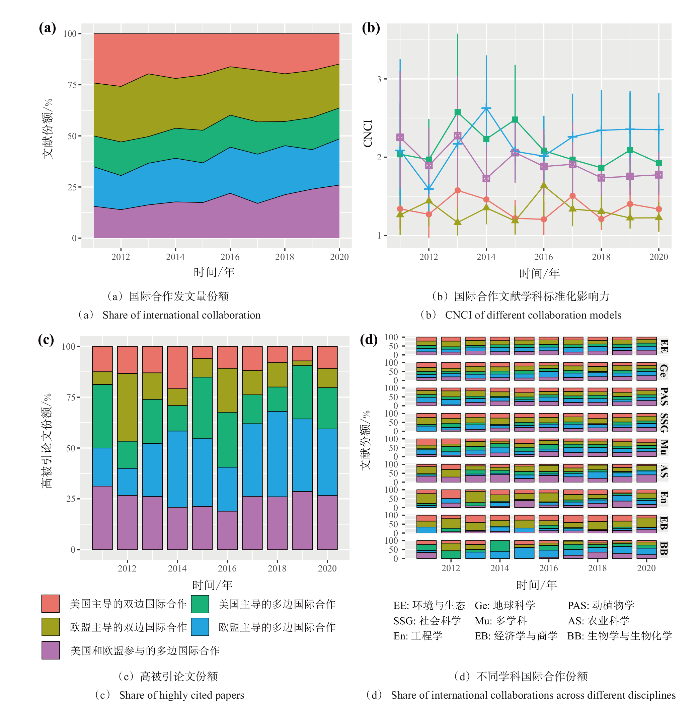
表4 2011-2020年欧美气候变化国际合作文献分布 (篇)Table 4 Outputs of International collaboration of U.S. or EU in the field of climate change, 2011-2020 |
| 合作模式 | 2011 | 2012 | 2013 | 2014 | 2015 | 2016 | 2017 | 2018 | 2019 | 2020 | 共计 |
|---|---|---|---|---|---|---|---|---|---|---|---|
| 中国主导的双边国际合作 | 96 | 113 | 110 | 146 | 151 | 132 | 171 | 209 | 199 | 192 | 1 519 |
| 美国主导的双边国际合作 | 103 | 119 | 172 | 162 | 202 | 193 | 243 | 248 | 254 | 278 | 1974 |
| 中国主导的多边国际合作 | 60 | 72 | 73 | 98 | 119 | 128 | 152 | 126 | 174 | 196 | 1198 |
| 美国主导的多边国际合作 | 77 | 73 | 114 | 142 | 145 | 184 | 231 | 255 | 213 | 293 | 1727 |
| 中美参与的多边国际合作 | 62 | 61 | 91 | 118 | 130 | 179 | 163 | 226 | 265 | 336 | 1631 |
| 共计 | 398 | 438 | 560 | 666 | 747 | 816 | 960 | 1 064 | 1 105 | 1 295 | 8 049 |
| [1] |
黄颖, 顾秀丽, 孙蓓蓓, 等. 我国交叉科学研究的演进与展望——基于学术著作视角[J]. 图书情报知识, 2022, 39(1): 61-72.
|
| [2] |
|
| [3] |
|
| [4] |
姚玉鹏, 刘羽, 鲁荣凯, 等. 国际合作和多学科交叉研究的成功实践——中国—德国合作项目“扬子区寒武纪大爆发时期环境和和生命过程的综合研究”[J]. 中国科学基金, 2009 (1): 52-55.
|
| [5] |
|
| [6] |
刘雨微, 王悠然. 跨学科合作需突破学术内部阻力[N]. 中国社会科学报, 2024-10-25(3).
|
| [7] |
|
| [8] |
|
| [9] |
|
| [10] |
|
| [11] |
|
| [12] |
|
| [13] |
|
| [14] |
浦墨, 袁军鹏, 岳晓旭, 等. 国际合作科学计量研究的国际现状综述[J]. 科学学与科学技术管理, 2015, 36(6): 56-68.
|
| [15] |
赵蓉英, 魏绪秋. 基于比较静态分析的国际合作与交流特征演化研究——以我国图书情报学为例[J]. 图书馆, 2017(8): 27-31, 49.
|
| [16] |
袁军鹏, 薛澜. 主导与协同: 中国国际科技合作的模式与特征分析. 科学学与科学技术管理, 2007(11): 5-9.
|
| [17] |
岳晓旭, 袁军鹏, 黄萃, 等. 基于ESI学科分类的中国科研国际合作主导地位变迁分析[J]. 科学学与科学技术管理, 2018, 39(4): 3-17.
|
| [18] |
|
| [19] |
|
| [20] |
|
| [21] |
|
| [22] |
黄荣辉, 吴国雄, 陈文, 等. 大气科学和全球气候变化研究进展[M]. 北京: 科学出版社, 2014.
|
| [23] |
|
| [24] |
|
| [25] |
|
| [26] |
|
| [27] |
|
/
| 〈 |
|
〉 |