Institutional Logic and Integration Paths of Diverse Data Registration Models in the Data Elements Market
|
Liu Pengbo Master's Candidate; Chen Qimei, Associate Researcher, PhD |
|
Wang Tangrong Master's Candidate |
|
Li Haoze,Master's Candidate. |
Received date: 2026-02-10
Online published: 2026-06-24
Supported by
China National Intellectual Property Administration project titled "Information Reference for the '14th Five-Year' Intellectual Property Plan" of the China National Intellectual Property Administration(E41I180101)
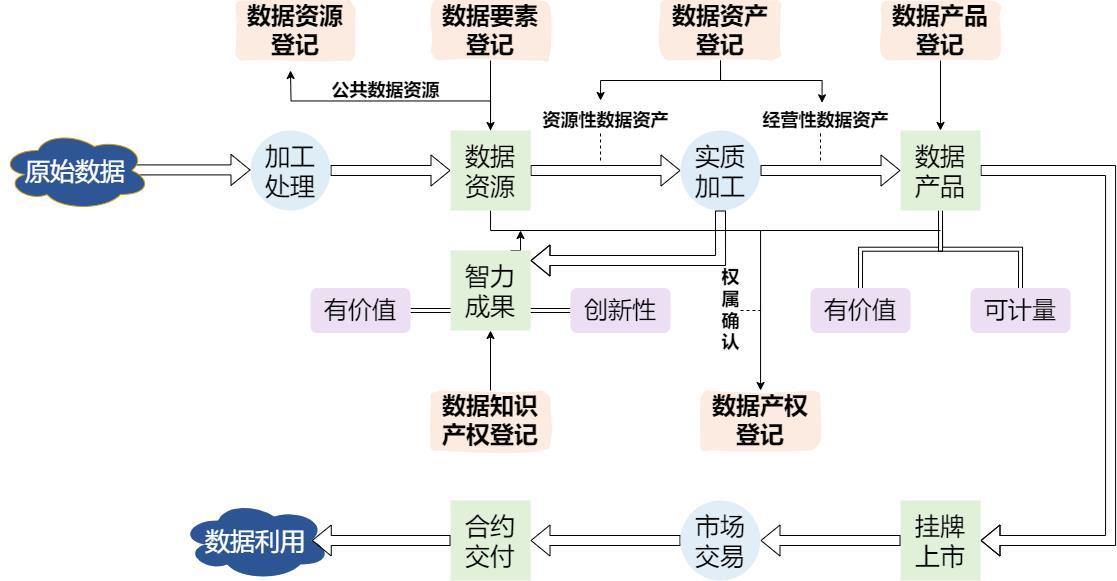
[Purpose/Significance] This paper systematically reviews China's existing multiple data registration models, compares their institutional differences, and identifies the resulting institutional coordination problems, in order to provide a reference for the optimization of China's data registration system. [Method/Process] Based on policy documents and registration platform materials, this paper analyzed the institutional differences, functional positioning, and coexistence logic of China’s multiple data registration practices by drawing on property rights theory, institutional economics, and data value chain theory. [Result/Conclusion] Different registration models exhibit differentiated characteristics in terms of rights objects, emphasis on entitlements, and protection intensity, reflecting the institutional choices of market participants to reduce transaction costs at different stages of application. However, the coexistence of multiple models has also generated institutional frictions, including unclear boundaries regarding the applicability of registration certificates, insufficient coordination of standards, limited cross-platform mutual recognition, and functional overlap, thereby increasing the institutional costs of data element circulation. In response, this paper proposes optimization paths in terms of clarifying the institutional boundaries of registration certificates, promoting the coordination of basic registration standards, strengthening coordination among different registration models, and improving scenario-oriented registration adaptation mechanisms. This study helps deepen understanding of the actual operation of China’s data registration system and provides a reference for further institutional improvement.
Liu Pengbo , Chen Qimei , Wang Tangrong , Li Haoze . Institutional Logic and Integration Paths of Diverse Data Registration Models in the Data Elements Market[J]. Knowledge Management Forum, 2026 , 11(3) : 243 -253 . DOI: 10.13266/j.issn.2095-5472.2026.021
表1 数据登记开展情况Table 1 Implementation status of data registration |
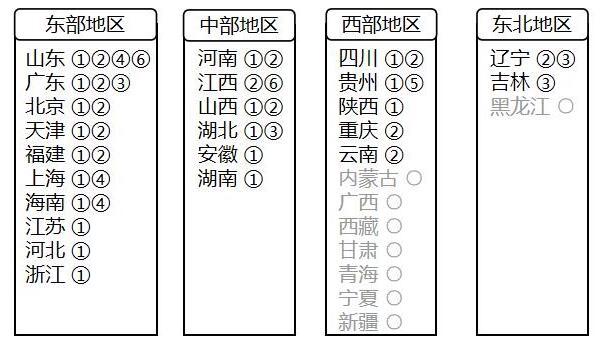
| 数据登记模式 | 开展地区/机构 | 政策文件数量/个 | 数据登记平台数量/个 |
|---|---|---|---|
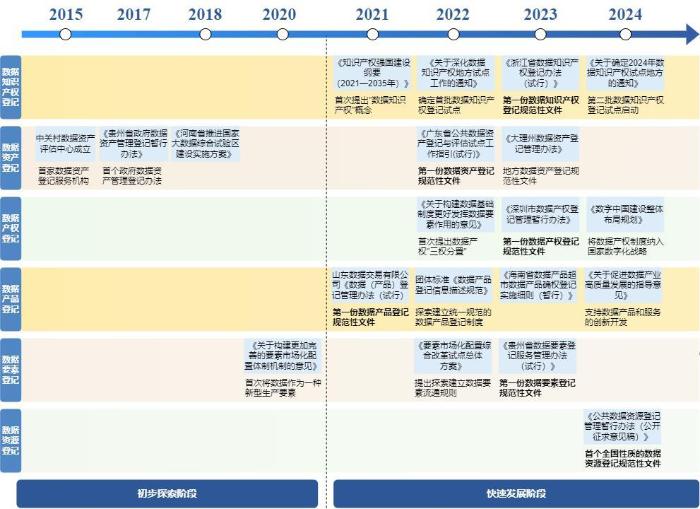
| 数据知识产权登记 | 安徽省、北京市、福建省、广东省、贵州省、海南省、河北省、河南省、湖北省、湖南省、江苏省、山东省、山西省、上海市、陕西省、广东省深圳市、四川省、天津市、浙江省 | 17 | 16 |
| 数据资产登记 | 北京市、重庆市、福建省厦门市、广东省、河南省郑州市、江西省、辽宁省沈阳市、山东省青岛市、山西省、四川省、天津市、云南省大理白族自治州 | 11 | 8 |
| 数据产权登记 | 湖北省、吉林省长春市、辽宁省沈阳市、广东省深圳市 | 4 | 3 |
| 数据产品登记 | 海南省、山东省、上海市 | 3 | 4 |
| 数据要素登记 | 贵州省 | 1 | 1 |
| 数据资源登记 | 国家发展改革委、江西省、山东省 | 3 | 1 |
表2 数据登记字段分类Table 2 Classification of data registration fields |
| 分类维度 | 登记字段 | 数据知识产权登记 | 数据资产登记 | 数据产品登记 | 数据产权登记 | 数据要素登记 | 数据资源登记 |
|---|---|---|---|---|---|---|---|
| 数据产权 | 主体类型、机构信息、数据(集合)名称、数据类型、所属行业 | √ | √ | √ | √ | √ | √ |
| 统一社会信用代码、数据格式和存储载体、数据集合形成时间、数据结构和规模、数据更新频次、数据处理或算法规则、数据条数、数据时间范围 | √ | √ | √ | √ | √ | / | |
| 算法模型用途、算法模型适用场景、主要技术、主要算法、学习方式、参数数量、算法模型基本原理、算法运行机制 | / | / | / | / | √ | / | |
| 数据持有状态、产权内容、产权类型/权利类型、权利期限、权利限制 | / | / | / | √ | / | / | |
| 权益方名称、数据使用限制、权益类别 | / | √ | / | / | / | / | |
| 字段数量 | 2 | 3 | 2 | 3 | 3 | 1 | |
| 流通交易 | 应用场景 | √ | √ | √ | √ | √ | √ |
| 数据样例 | √ | √ | √ | √ | √ | / | |
| 许可类型、数据查验模式 | / | / | / | √ | / | / | |
| 数据资产质押状态/质押状态 | / | √ | / | / | / | / | |
| 字段数量 | 2 | 3 | 2 | 3 | 2 | 1 | |
| 收益分配 | 数据资产评估机构、资产评估价值、权益比例 | / | √ | / | / | / | / |
| 字段数量 | 0 | 1 | 0 | 0 | 0 | 0 | |
| 安全治理 | 登记主体自然人身份证明或主体资格证明材料、数据来源 | √ | √ | √ | √ | √ | / |
| 合法性审核材料 | / | √ | √ | / | / | √ | |
| 存证机构、公证存证情况 | √ | / | / | √ | / | √ | |
| 数据合规性评估机构 | / | √ | √ | / | / | / | |
| 数据资产质量评估机构、数据资产评估质量评分 | / | √ | / | / | / | / | |
| 字段数量 | 2 | 4 | 3 | 2 | 1 | 2 |
表3 数据登记特点Table 3 Characteristics of data registration |
| 比较维度 | 登记机构 | 登记平台 | 登记主体 | 登记对象 | 登记目的 |
|---|---|---|---|---|---|
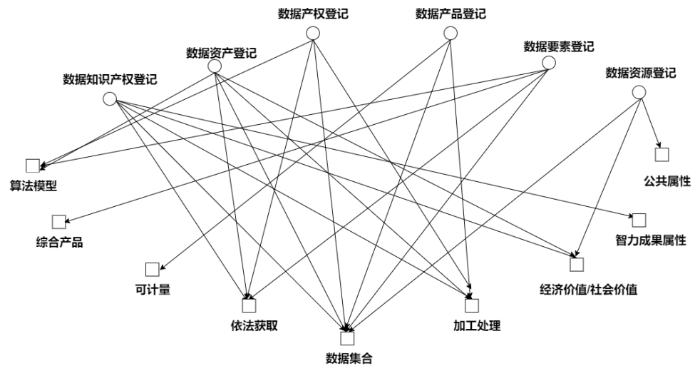
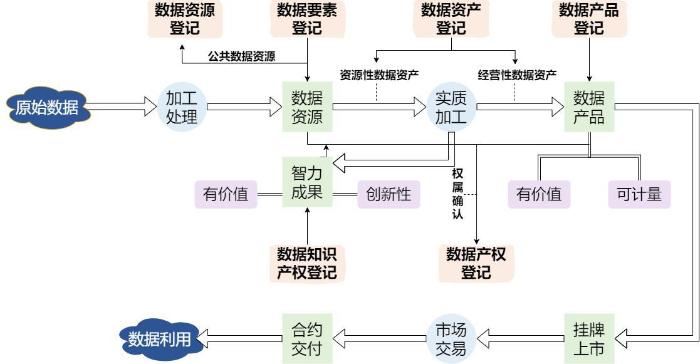
| 数据知识产权登记 | 地方知识产权局 | 独立平台 | 数据持有者或数据处理者 | 依法获得、经加工处理、具有实用价值的数据 | 依法持有、加工使用、流通交易、质押融资、收益分配和权益保护 |
| 数据资产登记 | 地方数据主管部门 | 数据交易所/独立平台 | 拥有或控制数据资产的企业或机构,自然人、法人或非法人组织 | 合法拥有、可计量、有价值/数据资源或数据产品 | 权属界定、流通交易、支持决策、监督管理、公开公示、司法依据、质押融资 |
| 数据产品登记 | 地方知识产权局、地方数据主管部门 | 数据交易所 | 自然人、法人或非法人组织,数据供方、数据服务方等相关主体 | 合法获取、实质性加工、创新性劳动、有价值的数据 | 权属确定、流通交易 |
| 数据产权登记 | 国家知识产权局、地方数据主管部门 | 数据交易所/独立平台 | 自然人、法人或非法人组织 | 数据资源和数据产品 | 流通交易、融资抵押、数据资产入表、会计核算、争议仲裁 |
| 数据资源登记 | 数据主管部门 | 公共数据资源登记平台 | 享有数据资源相关权益,并向登记机构申请登记的自然人、法人或非法人组织 | (公共)数据资源 | 明确数据资源权属,保护数据资源主体合法权益,促进数据交易、流通、质押 |
| 数据要素登记 | 贵州省地方数据主管部门 | 数据交易所 | 自然人、法人和其他组织 | 数据资源、算法模型、算力资源以及综合形成的产品 | 权益保护、流通交易、质押融资、司法依据、要素核算 |
| [1] |
刘金钊, 汪寿阳. 数据要素市场化配置的困境与对策探究[J]. 中国科学院院刊, 2022, 37(10): 1435-1444.
|
| [2] |
杨东, 李子硕. 数据登记的功能逻辑与制度构建——基于“利益—权利”共生视角[J]. 中国人民大学学报, 2024, 38(5): 114-127.
|
| [3] |
刘然, 孟奇勋, 余忻怡. 知识产权运营领域数据要素市场化配置路径研究[J]. 科技进步与对策, 2021, 38(24): 9-17.
|
| [4] |
杨东, 何玥. 数据知识产权登记制度的基本逻辑与发展面向[J]. 行政管理改革, 2024(11): 44-55.
|
| [5] |
郑诗仪. 数据知识产权登记制度的形成逻辑、实践问题与改进路径研究[J]. 大数据, 2025, 11(4): 44-56.
|
| [6] |
张真源. 数据资产登记制度的逻辑转变、核心架构与优化策略[J]. 治理研究, 2024, 40(6): 123-139, 160.
|
| [7] |
孟奇勋, 程伟佳, 戴运. 我国数据知识产权登记制度试点改革路径研究[J]. 科技进步与对策, 2025, 42(12): 151-160.
|
| [8] |
杨璐维. 数据产权结构性分置的科学内涵、理论逻辑及现实价值[J]. 内蒙古社会科学, 2024, 45(5): 172-178.
|
| [9] |
张素华, 邓鹏. 数据产权统一登记体系的探索与制度构建[J]. 电子政务, 2024(12): 1-13.
|
| [10] |
邵红红. 数据产权登记的功能定位、模式选择与制度完善——以信号理论为切入点[J]. 知识产权, 2024(3): 54-72.
|
| [11] |
冀瑜. 数据知识产权登记的理论证成与制度展开[J]. 法治研究, 2024(6): 57-68.
|
| [12] |
陈晨, 温士苇, 王思博, 等. 数据资产登记平台建设的现状研究与对策建议[J]. 网络安全与数据治理, 2024, 43(12): 60-66.
|
| [13] |
徐春学, 蔡军霞. 面向数字经济时代 建设数据要素登记平台的路径及对策建议[J]. 中国经贸导刊, 2023(12): 64-66.
|
| [14] |
魏贝, 李哲行, 王萍萍, 等. 数据登记典型模式与实践路径分析[J]. 网络安全与数据治理, 2025, 44(1): 83-89.
|
| [15] |
尹西明, 钱雅婷, 武沛琦, 等. 数据要素向新质生产力转化的理论逻辑与典型实践路径研究[J]. 科学学与科学技术管理, 2026, 47(3): 128-142.
|
| [16] |
|
| [17] |
周文泓, 杨璐羽, 吴一凡. 欧盟数据政策体系研究及其启示[J]. 情报理论与实践, 2025, 48(1): 184-192, 204.
|
| [18] |
胡晟熙, 朱子旋. 国外数据要素创新应用与治理的经验启示[J]. 数字经济, 2024(8): 66-71.
|
| [19] |
|
| [20] |
|
| [21] |
|
| [22] |
|
| [23] |
陶雪晴. 国外数据流通典型模式[J]. 通信企业管理, 2023(9): 47-49.
|
| [24] |
朱海洋. 基于数据要素流通视角的数据交易平台发展现状与对策[J]. 中国流通经济, 2024, 38(2): 24-33.
|
| [25] |
|
| [26] |
OH H,
|
| [27] |
王雪, 夏义堃, 裴雷. 国内外数据要素市场研究进展:系统性文献综述[J]. 图书情报知识, 2023, 40(6): 117-128.
|
| [28] |
|
| [29] |
|
| [30] |
文禹衡, 付张祎. 基于扎根理论的我国数据要素确权地方立法策略及其调整[J]. 图书情报工作, 2023, 67(7): 53-66.
|
| [31] |
李晓翔, 刘玉霞, 谢阳群, 等. 数据编排:一种新的数据价值化理论框架[J]. 情报理论与实践, 2025, 48(4): 35-43.
|
| [32] |
刘桂锋, 吴雅琪, 韩牧哲, 等. 我国数据要素研究进展:内涵阐释、运行机理、治理体系与实践应用[J]. 图书情报工作, 2024, 68(23): 139-152.
|
/
| 〈 |
|
〉 |