Research on Evaluation Methods and Application of Security Governance Capability of Smart Library
|
Dai Liwei, Master’s Candidate |
Received date: 2025-11-18
Online published: 2026-04-08
Supported by
a major project of the National Social Science Fund of China titled "Theoretical and Practical Research on Enhancing Digital Literacy of the Whole People in the Era of Intelligence"(24&ZD179)
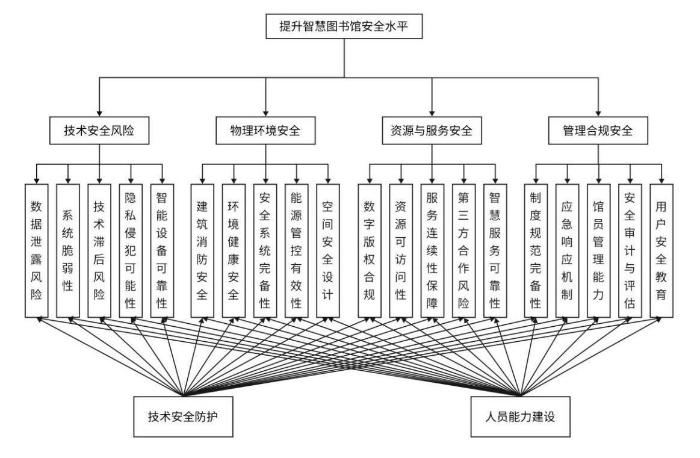
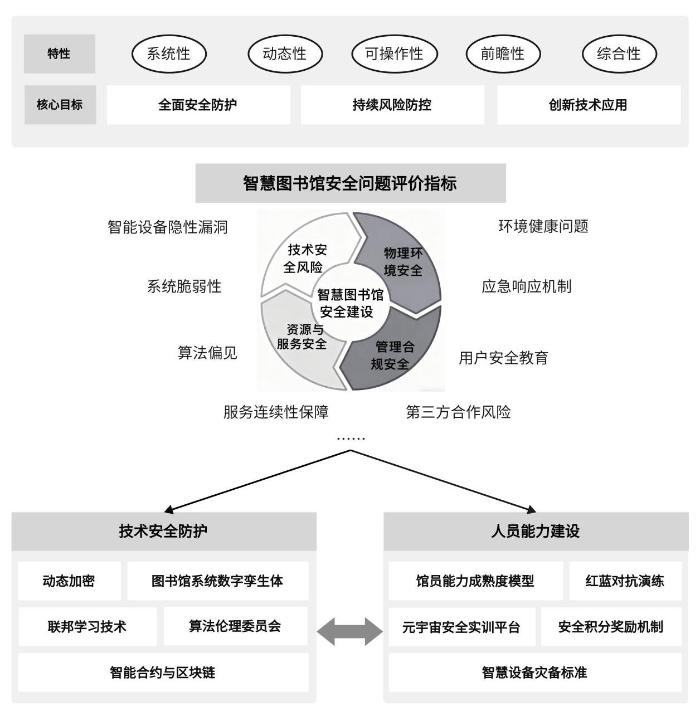
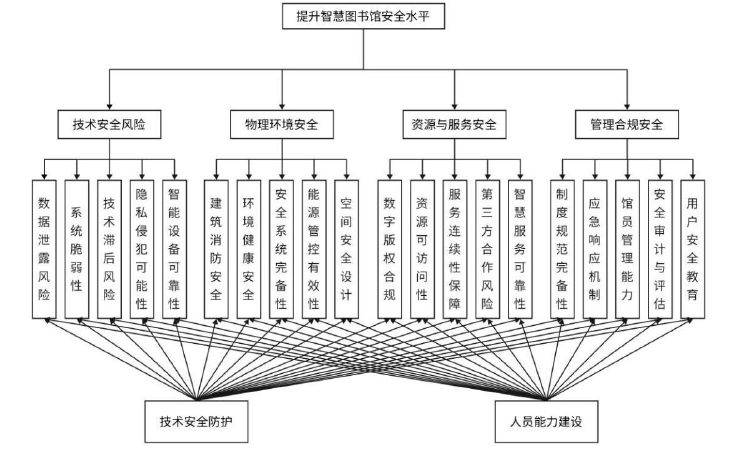
[Purpose/Significance] Addressing the multidimensional security threats that smart libraries encounter during their digital transformation, this study aims to provide a quantifiable assessment framework and decision-making basis for the security construction of smart libraries. [Method/Process] Through content analysis of existing relevant literature, this study, based on the Delphi method, utilized the Analytic Hierarchy Process (AHP) to calculate and determine the weights of evaluation indicators. An evaluation index system for smart library security governance capability was constructed, consisting of 4 primary indicators and 20 secondary indicators. Key risk factors were identified through empirical analysis. [Result/Conclusion] Based on the empirical findings, the study proposes targeted pathways for technological security protection and personnel capacity building.
Dai Liwei , Yang Xinya . Research on Evaluation Methods and Application of Security Governance Capability of Smart Library[J]. Knowledge Management Forum, 2026 , 11(2) : 125 -134 . DOI: 10.13266/j.issn.2095-5472.2026.011
表1 智慧图书馆安全治理能力评价指标汇总表Table 1 Summary table of evaluation indicators for security governance capability of smart library |
| 目标层 | 一级指标 | 二级指标 | 描述 |
|---|---|---|---|
| 提高智慧图书馆安全水平(Ax) | 技术安全风险A1 | 数据泄露风险A11 | 黑客攻击或系统漏洞导致读者隐私、借阅记录等敏感数据被非法获取的可能性 |
| 系统脆弱性A12 | 操作系统、数据库存在的未修补漏洞,易被恶意利用引发瘫痪或数据损毁 | ||
| 技术滞后风险A13 | 硬件老化或软件版本落后,造成安全防护能力下降及新型攻击防御失效 | ||
| 隐私侵犯可能性A14 | 过度采集用户行为数据或未授权共享数据,违反隐私保护原则 | ||
| 智能设备可靠性A15 | RFID标签识别错误、机器人导航失灵等导致服务中断或安全隐患的概率 | ||
| 物理环境安全A2 | 建筑消防安全A21 | 智能烟感报警系统与喷淋装置的联动效率,及疏散通道畅通性的保障能力 | |
| 环境健康安全A22 | 照明频闪、甲醛超标、PM2.5浓度等对读者健康产生负面影响的潜在风险 | ||
| 安防系统完备性A23 | 监控摄像头盲区比例、入侵检测误报率及门禁系统非法闯入拦截成功率 | ||
| 能源管控有效性A24 | 电路过载保护机制、备用电源切换时长及温控系统稳定性 | ||
| 空间安全设计A25 | 防滑地面材料、锐角家具防护、无障碍通道合规性等物理伤害预防措施 | ||
| 资源与服务安全A3 | 数字版权合规A31 | 资源数字化转换、网络传播中未获授权导致的侵权纠纷与法律追责风险 | |
| 资源可访问性A32 | 数据库平台年宕机时长、跨库检索失败率及校外访问认证故障 | ||
| 服务连续性保障A33 | 自助借还机、预约系统的双机热备与数据灾难恢复机制 | ||
| 第三方合作风险A34 | 云服务商数据回流合规性、API接口滥用或供应商停服导致的资源断供 | ||
| 智慧服务可靠性A35 | AI荐书错误率、VR设备晕动症诱发率及机器人碰撞事故频率 | ||
| 管理合规安全A4 | 制度规范完备性A41 | 版权管理政策、数据分级保护制度及重大故障应急预案的文本覆盖完整性 | |
| 应急响应机制A42 | 从安全事件发生到启动处置流程的时效及跨部门协同效率 | ||
| 馆员安全能力A43 | 技术人员持有网络安全认证比例及年度培训完成率 | ||
| 安全审计与评估A44 | 第三方渗透测试频率、漏洞修复率等闭环管理 | ||
| 用户安全教育A45 | 隐私保护宣传册覆盖率、数字素养讲座参与度及phishing攻击模拟测试通过率 |
表2 平均随机一致性系数RI的取值Table 2 The value of the average random consistency index (RI) |
| 阶数 | 1 | 2 | 3 | 4 | 5 | 6 | 7 | 8 | 9 |
|---|---|---|---|---|---|---|---|---|---|
| R.I. | 0.00 | 0.00 | 0.52 | 0.89 | 1.12 | 1.26 | 1.36 | 1.41 | 1.46 |
表3 综合指标权重Table 3 Comprehensive Indicator Weight |
| 目标层 | 评价层 | 权重/% | 指标层 | 归档权重/% | 综合权重/% | 排序 |
|---|---|---|---|---|---|---|
| 提高智慧图书馆安全水平(Ax) | 技术安全风险A1 | 29.51 | A11 | 25.61 | 7.56 | 1 |
| A12 | 25.61 | 7.56 | 1 | |||
| A13 | 14.71 | 4.34 | 14 | |||
| A14 | 19.41 | 5.73 | 6 | |||
| A15 | 14.71 | 4.34 | 14 | |||
| 物理环境安全A2 | 20.87 | A21 | 25.35 | 5.29 | 11 | |
| A22 | 12.67 | 2.64 | 20 | |||
| A23 | 25.35 | 5.29 | 11 | |||
| A24 | 22.07 | 4.61 | 13 | |||
| A25 | 14.56 | 3.04 | 18 | |||
| 资源与服务安全A3 | 24.81 | A31 | 25 | 6.2 | 3 | |
| A32 | 25 | 6.2 | 3 | |||
| A33 | 25 | 6.2 | 3 | |||
| A34 | 12.5 | 3.1 | 16 | |||
| A35 | 12.5 | 3.1 | 16 | |||
| 管理合规安全A4 | 24.81 | A41 | 22.22 | 5.51 | 7 | |
| A42 | 22.22 | 5.51 | 7 | |||
| A43 | 22.22 | 5.51 | 7 | |||
| A44 | 22.22 | 5.51 | 7 | |||
| A45 | 11.12 | 2.76 | 19 |
| [1] |
|
| [2] |
|
| [3] |
|
| [4] |
|
| [5] |
陆康, 刘慧, 任贝贝, 等.智慧图书馆用户数据隐私保护研究——基于《中华人民共和国网络安全法》和《一般数据保护条例》的文本启示[J]. 图书馆理论与实践, 2020(3): 17-21.
|
| [6] |
王静, 王鹏.智慧图书馆生成式AI大模型风险治理机制研究[J]. 情报杂志, 2024, 43(8): 190-197.
|
| [7] |
霍瑞娟.图书馆智慧化转型中数据治理体系建设路径探究[J]. 图书情报工作, 2024, 68(22): 37-44.
|
| [8] |
邓李君, 杨文建.基于用户满意视角的智慧图书馆评价体系研究[J]. 图书馆学研究, 2020(3): 18-25.
|
| [9] |
陈凌, 王燕雯.智慧图书馆馆员综合能力评价指标研究[J]. 数字图书馆论坛, 2018(4): 66-72.
|
| [10] |
段美珍, 初景利, 张冬荣, 等.智慧图书馆建设评价指标体系构建与解析[J]. 图书情报工作, 2021, 65(14): 30-39.
|
| [11] |
|
| [12] |
李菲菲.智慧图书馆评价指标体系初探[J]. 图书馆界, 2021(3): 84-88, 94.
|
| [13] |
李佳轩, 储节旺, 杜秀秀.关联、黑箱与赋能:AIGC驱动智慧图书馆的转型路径[J]. 图书情报工作, 2023, 67(23): 18-27.
|
| [14] |
韩艳芳, 蔡培.批判算法视角的我国智慧图书馆风险、成因及对策[J]. 图书与情报, 2025(2): 95-103.
|
| [15] |
续斐.高校图书馆智慧化转型中的数据伦理:探讨数据主权与用户隐私治理[C]//2023年第十六届图书馆管理与服务创新论坛论文集.上海: 教育部高等学校图书情报工作指导委员会, CALIS管理中心, 上海交通大学, 2025: 67.
|
| [16] |
General data protection regulation (GDPR) – legal text[EB/OL]. [2026-01-18].
|
| [17] |
华北电力大学新闻网. 图书馆完成区域灯光照明改善提升工作[EB/OL]. [2026-01-21].
North China Electric Power University News Network. Library completes regional lighting improvement project[EB/OL]. [2026-01-21].
|
| [18] |
王旭, 程光辉, 赵鸿玉, 等.技术性压力视角下智慧图书馆人工智能风险防控体系研究[J]. 图书馆学研究, 2024(7): 56-69.
|
| [19] |
张兴旺, 李洁, 徐路.面向智慧图书馆的跨模态人智交互体系构建及其实践框架分析[J]. 图书馆, 2025(8): 25-34.
|
| [20] |
夏军营, 汪焕成.智慧图书馆数据合规路径构建研究[J]. 图书馆, 2024(11): 53-59.
|
| [21] |
杨新涯, 钱国富, 唱婷婷, 等.元宇宙是图书馆的未来吗?[J]. 图书馆论坛, 2021, 41(12): 35-44.
|
/
| 〈 |
|
〉 |