Research on the Authenticity of Online User Comment Expression Based on Meta Analysis
|
Zhang Xinzong, Undergraduate; |
|
Zhang Wenxin, Undergraduate; |
|
Wang Yuexuan, Undergraduate; |
|
Li Wenrui, Undergraduate; |
|
Sheng Qingquan, Undergraduate. |
Received date: 2025-04-02
Online published: 2025-08-31
Supported by
Guangdong Provincial Natural Science Foundation Project titled "Research on Interdisciplinary Analogous Knowledge Discovery Based on Scientific and Technological Literature Big Data"(2024A1515011778)
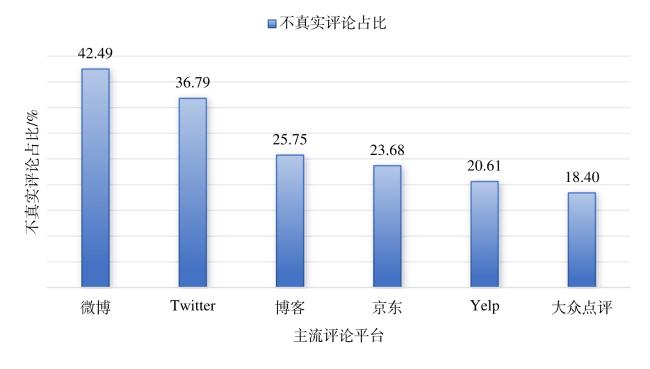
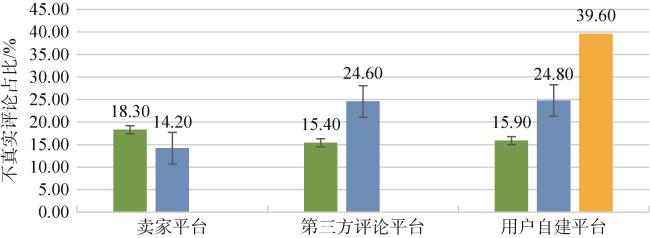
[Purpose/Significance] With the rapid growth of online users, online comments increasingly influence users’ choices and behaviors on the internet. To address the insufficient assessment of authenticity in current online comment research, this study employs meta-analysis to quantitatively evaluate the authenticity of online comments, revealing the distribution patterns of online comments, revealing the distribution patterns of inauthentic comments, and providing a reference for data reliability judgment in related studies. [Method/Process] Given the limited research on factors related to comment authenticity, this study innovatively proposed to use the proportion of inauthentic comments as a differential variable for meta-analysis. Heterogeneity tests, publication bias tests, and random-effects models were applied, combined with visualization tools to analyze inauthenticity across different platforms and comment types. [Result/Conclusion] There are generally over 15% of untrue comments, and the proportion continues to rise. The results vary depending on factors such as platform type and domestic and international environment. Among the review platforms widely selected by academia, there are at least 15% of untrue reviews on third-party review platforms (such as Dianping, Yelp, etc.) that are independent of merchants and customers; There are many untrue reviews on seller platforms independent of users (such as JD.com, Amazon, etc.), accounting for about 20%; In user built platforms without commercial attributes (such as Weibo, blogs, etc.), the number of untrue comments is the highest, accounting for more than 25%, most of which are rumors and junk comments.
Key words: meta analysis; online comments; authenticity; fake review
Zhang Xinzhong , Xu Jian , Zhang Wenxin , Wang Yuexuan , Li Wenrui , Sheng Qingquan . Research on the Authenticity of Online User Comment Expression Based on Meta Analysis[J]. Knowledge Management Forum, 2025 , 10(4) : 321 -334 . DOI: 10.13266/j.issn.2095-5472.2025.021
表1 文献编码框架Table 1 Document coding framework |
| 编码信息 | 操作性定义 |
|---|---|
| 国内/国外 | 文章研究的评论平台来自国内/国外 |
| 评论平台类型 | 文章研究的评论平台类型 |
| 评论类型 | 文章数据的评论类型 |
| 样本量 | 文章抽取的数据样本元素的总数量 |
| 不真实评论量 | 文章抽取的数据样本元素中虚假评论、谣言、垃圾评论等的数量 |
| 不真实比例 | 不真实评论数量/样本量 |
表2 文献编码整合Table 2 Literature coding integration |
| 评论平台类型 | 评论类型 | 样本量/条 | 不真实数量/条 | 不真实比例 |
|---|---|---|---|---|
| 卖家平台 | 虚假评论 | 490 018 | 65 066 | 0.183 |
| 垃圾评论 | 7 593 | 1 017 | 0.142 | |
| 谣言 | 0 | 0 | ||
| 第三方评论平台 | 虚假评论 | 68 461 | 16 954 | 0.154 |
| 垃圾评论 | 98 589 | 27 811 | 0.246 | |
| 谣言 | 0 | 0 | ||
| 用户自建平台 | 虚假评论 | 19 751 | 3 404 | 0.159 |
| 垃圾评论 | 123 752 | 25 840 | 0.248 | |
| 谣言 | 123 950 | 45 913 | 0.396 |
表3 发表偏倚分析结果Table 3 Publication bias test results |
| 评论类型 | K | Egger检验 | 失效安全系数 | |||
|---|---|---|---|---|---|---|
| 95%的置信区间 | T值 | P值 | ||||
| 下限 | 上限 | |||||
| 卖家—虚假 | 22 | -21.004 | 38.121 | 0.604 | 0.552 | 8 383 |
| 卖家—垃圾 | 6 | -21.502 | 19.151 | 0.161 | 0.880 | 4 083 |
| 三方—虚假 | 13 | -38.536 | -6.811 | 3.146 | 0.009 | 2 519 |
| 三方—垃圾 | 3 | -133.477 | -81.215 | 52.197 | 0.012 | 3 888 |
| 自建—虚假 | 4 | -57.765 | 38.058 | 0.885 | 0.470 | 4 991 |
| 自建—垃圾 | 36 | -11.108 | 9.876 | 0.120 | 0.906 | 3 131 |
| 自建—谣言 | 18 | -12.227 | 24.372 | 0.703 | 0.492 | 6 774 |
|
表4 异质性检验结果Table 4 Heterogeneity test results |
| 评论类型 | K | N | 异质性(Q检验) | Tau-squared | |||
|---|---|---|---|---|---|---|---|
| Q值 | P值 | I2 | Tau Tau2 | ||||
| 卖家—虚假 | 22 | 490 018 | 42 299.828 | <0.001 | 99.950 | 1.058 | 1.119 |
| 卖家—垃圾 | 6 | 7593 | 116.300 | <0.001 | 95.701 | 0.402 | 0.162 |
| 三方—虚假 | 13 | 68 461 | 4 432.360 | <0.001 | 99.729 | 0.670 | 0.449 |
| 三方—垃圾 | 3 | 98 589 | 2 455.336 | <0.001 | 99.919 | 0.465 | 0.216 |
| 自建—虚假 | 4 | 19 751 | 504.304 | <0.001 | 99.405 | 0.749 | 0.560 |
| 自建—垃圾 | 36 | 123 752 | 13 365.989 | <0.001 | 99.738 | 0.918 | 0.843 |
| 自建—谣言 | 18 | 123 950 | 6 459.490 | <0.001 | 99.737 | 0.526 | 0.277 |
|
表5 效应值分析结果Table 5 Effect value analysis results |
| 评论类型 | K | N | r | 95%置信区间 | 双尾检验 | |||
|---|---|---|---|---|---|---|---|---|
| 下限 | 上限 | Z值 | P值 | |||||
| 卖家—虚假 | 22 | 490 018 | 0.183 | 0.125 | 0.258 | -6.638 | <0.001 | |
| 卖家—垃圾 | 6 | 7 593 | 0.142 | 0.106 | 0.188 | -10.545 | <0.001 | |
| 三方—虚假 | 13 | 68 461 | 0.154 | 0.112 | 0.208 | -9.090 | <0.001 | |
| 三方—垃圾 | 3 | 98 589 | 0.246 | 0.162 | 0.356 | -4.176 | <0.001 | |
| 自建—虚假 | 4 | 19 751 | 0.159 | 0.083 | 0.284 | -4.403 | <0.001 | |
| 自建—垃圾 | 36 | 123 752 | 0.248 | 0.196 | 0.308 | -7.190 | <0.001 | |
| 自建—谣言 | 18 | 123 950 | 0.396 | 0.339 | 0.456 | -3.374 | 0.001 | |
|
张鑫众:撰写论文,收集与分析数据,修改论文;
徐健:提出思路,修改论文;
张雯昕:收集与整理数据,撰写论文;
王玥瑄:收集与整理数据,撰写论文;
李文睿:收集与整理数据,撰写论文;
盛清泉:收集与整理数据,撰写论文。
| [1] |
|
| [2] |
|
| [3] |
|
| [4] |
|
| [5] |
武雅利, 徐勇, 焦梦蕾, 等. 基于在线交易的虚假评论与网络水军研究综述[J]. 现代计算机, 2019(21): 37-40.
WU, Y L,
|
| [6] |
王宁, 宋嘉莹, 杨学成. C2C电商平台中在线评论偏离真实性的诱因及应对策略[J]. 软科学, 2017, 31(4): 100-103.
|
| [7] |
李璐旸, 秦兵, 刘挺. 虚假评论检测研究综述[J]. 计算机学报, 2018, 41(4): 946-968.
|
| [8] |
魏瑾瑞, 徐晓晴. 虚假评论、消费决策与产品绩效——虚假评论能产生真实的绩效吗[J]. 南开管理评论, 2020, 23(1): 189-199.
|
| [9] |
陈燕方, 娄策群. 在线商品虚假评论形成路径研究[J]. 现代情报, 2015, 35(1): 49-53.
|
| [10] |
|
| [11] |
刘建明. 舆论传播[M]. 北京: 清华大学出版社, 2000.
|
| [12] |
|
| [13] |
王永贵, 张言彩.元分析方法在国内外经济管理研究中的应用比较[J]. 经济管理, 2012, 34(4): 182-190.
|
| [14] |
彭国超, 程晓, 刘彩华. 基于元分析的网络用户个人信息披露意愿影响因素研究[J]. 现代情报, 2022, 42(11): 111-120.
|
| [15] |
杨笑. 基于元分析的电子商务平台评论有用性影响因素研究[D]. 北京: 北京外国语大学, 2022.
|
| [16] |
|
| [17] |
万晨. 不同平台在线评论消费者感知差异研究——产品类型的调节作用[J]. 现代情报, 2014, 34(12): 154-158, 167.
|
| [18] |
|
| [19] |
|
| [20] |
曾昭炳, 姚继军. 寻找“最佳证据”:如何运用元分析进行文献综述——以STEM教育对学生成绩的影响研究为例[J]. 华东师范大学学报(教育科学版), 2020, 38(6): 70-85.
|
| [21] |
严炜炜, 陈若瑜, 张敏. 基于元分析的在线知识付费意愿影响因素研究[J]. 情报学报, 2021, 40(2): 204-212.
|
| [22] |
韩继峰. 基于元分析的用户标注动机影响因素研究[J]. 情报探索, 2019(3): 6-10.
|
| [23] |
夏凌翔. 元分析及其在社会科学研究中的应用[J]. 西北师大学报(社会科学版), 2005, 42(5): 55-58.
|
| [24] |
|
| [25] |
|
| [26] |
任亚峰, 姬东鸿, 张红斌, 等. 基于PU学习算法的虚假评论识别研究[J]. 计算机研究与发展, 2015, 52(3): 639-648.
|
| [27] |
|
| [28] |
|
/
| 〈 |
|
〉 |