Domain Knowledge Discovery Based on the Perspective of Technology Integration: A Case of Low-Carbon Energy Technology
Received date: 2025-05-01
Online published: 2025-06-30
Supported by
This work is supported by the National Social Science Fund of China titled "Research on the Multivariate Relationship Fusion Method for Technological Innovation Path Identification and Prediction"(18BTQ067)
Chinese Academy of Sciences Project "Youth Innovation Promotion Association"(2022173)
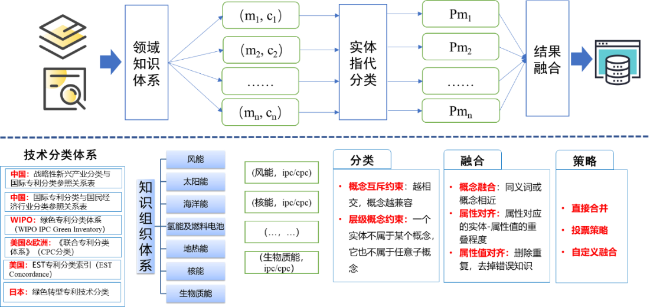
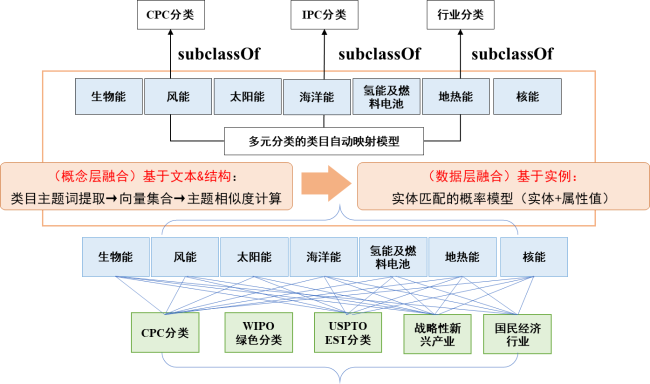
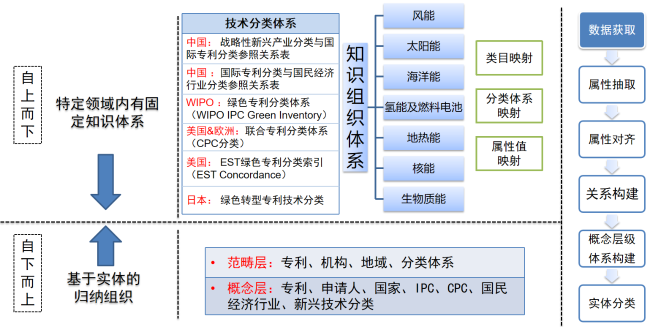
[Purpose/Significance] This study proposes a methodology and process for knowledge discovery in technology fields based on the integration perspective. By constructing a knowledge map of multi-energy technology and focusing on analyzing the integration features (e.g., synergistic energy utilization and system integration), this study aims to provide a new methodological tool for identifying the potential of technology integration. [Method/Process] By integrating different patent technology classification systems, this study innovatively constructed a multi-energy integration patent knowledge graph. It established a domain knowledge organization framework based on multi-technology classification fusion. The conceptual model was constructed by combining the "top-down" and "bottom-up" methods, with the low-carbon energy technology field using as the empirical research object to systematically analyze the multi-energy fusion trend, fusion signal, and multi-energy fusion potential of low-carbon energy. [Result/Conclusion] Empirical study shows that combination of knowledge map, and bibliometrics can help analyze the development trends of low-carbon energy convergence, reveal the characteristics of technology integration of multiple low-carbon energy sources, and focus on specific domains to explore the potential and technological evolution path, to provide a decision-making basis for the development and application of low-carbon multi-energy integration technology.
Li Shuying , Zhang Xian , Li Jiahui , Ma Wudan , Wang Xiaoyu , Liu Chunjiang , Xu Haiyun . Domain Knowledge Discovery Based on the Perspective of Technology Integration: A Case of Low-Carbon Energy Technology[J]. Knowledge Management Forum, 2025 , 10(3) : 256 -274 . DOI: 10.13266/j.issn.2095-5472.2025.017
表1 低碳能源领域不同技术分类体系对比Table 1 Comparison of different technology classification systems in the field of low-carbon energy |
| 序号 | 机构 | 分类体系 | 国家/地区 | 多种能源分类及范围 |
|---|---|---|---|---|
| 1 | CNIPA[11](China National Intellectual Property Administertration) | 战略性新兴产业分类与国际专利分类参照关系表(2021)(试行) | 中国 | “新能源产业”:核电、风能、太阳能、生物质能及其他能源产业、智能电网 |
| 2 | CNIPA[12] | 国际专利分类与国民经济行业分类参照关系表(2018) | 中国 | 441“电力生产”:热电联产、水电、核电、风电、太阳能、生物质能和其他 |
| 3 | WIPO[13](World Intellectual Property Organization) | 绿色专利分类体系(WIPO IPC Green Inventory) | 全球性 | 核能发电、可替代能源(生物燃料、燃料电池、氢能、风能、太阳能、地热能、废热能等) |
| 4 | USPTO(United States Patent and Trademark Office)、EPO[14](European Patent Office) | 联合专利分类体系 (CPC分类) | 欧美 | Y02E(与能源发电、输电、配电相关的低碳技术):Y02E10/1(地热)、Y02E10/2(水力)、Y02E10/3(海洋)、Y02E10/4(太阳能热)、Y02E10/5(太阳能光伏)、Y02E10/7(风能),Y02E50/1(生物燃料),Y02E50/3(废物燃料),Y02E30/1(废生物燃料)、Y02E30/1(核聚变)、Y02E30/3和Y02E30/4(核裂变) |
| 5 | USPTO[15] | EST(Environmentally Sound Technology, EST)绿色专利分类索引(EST Concordance) | 欧美 | 可替代能源:生物质能、燃料电池、地热能、水能、太阳能、风能 |
| 6 | JPO[16](Japan Patent Office) | 绿色转型技术目录(Green Transformation Technologies Inventory) | 日本 | 能源供应(Green Transformation,简称GXA):太阳能光伏发电、太阳能热能利用、风力发电、地热利用、水电、海洋能源发电、生物质、核能发电、燃料电池、氢技术、氨技术 |
表2 低碳能源、储能与多能融合专利检索结果Table 2 Patent search results for low-carbon energy, energy storage and multi-energy integration |
| 一级领域 | 二级领域 | 专利数量/件 | 占比/% |
|---|---|---|---|
| 低碳零碳能源 (1 041 553件) | 核电及核能非电利用 | 131 903 | 12.6 |
| 可再生能源(太阳能、风能、生物质能、地热能、海洋能) | 716 720 | 68.5 | |
| 氢能及燃料电池 | 198 266 | 18.9 | |
| 储能与多能融合 (536 591件) | 储热/储冷 | 55 065 | 10.2 |
| 物理储电 | 44 051 | 8.2 | |
| 化学储电 | 416 783 | 77.5 | |
| 以可再生能源为主的新型电力系统 | 21 605 | 4.0 |
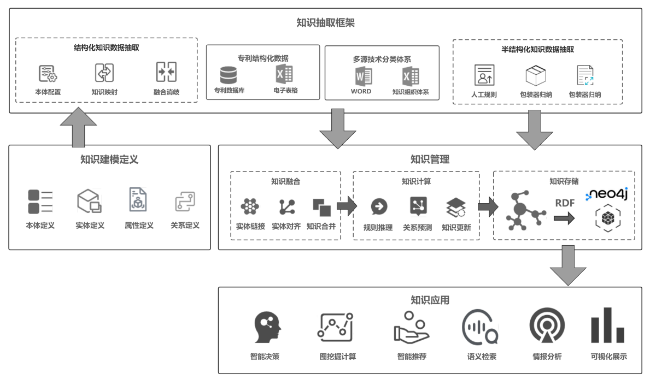
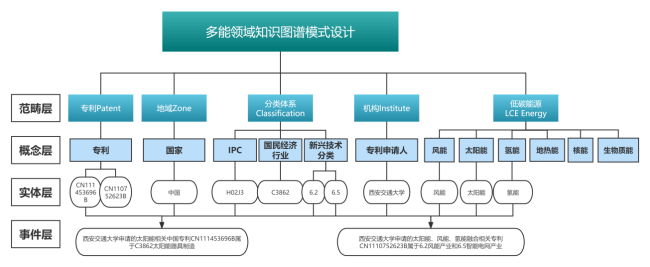
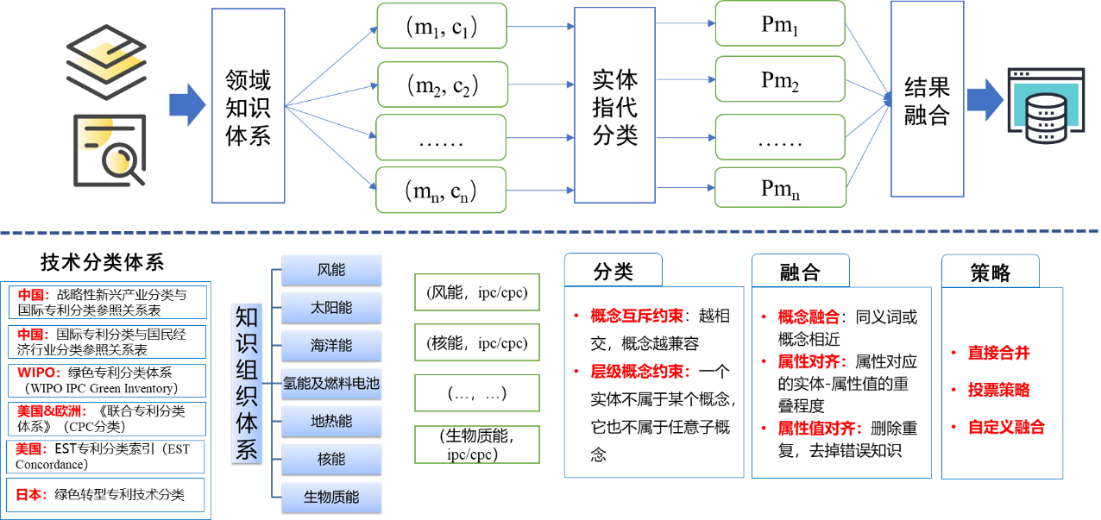
图5 低碳领域知识图谱模式构建和实体关系Figure 5 Knowledge graph model construction and entity relationship in the low-carbon field |
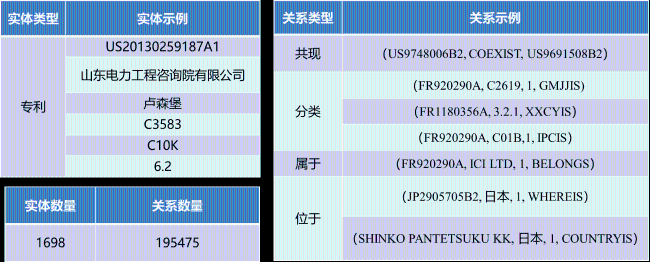
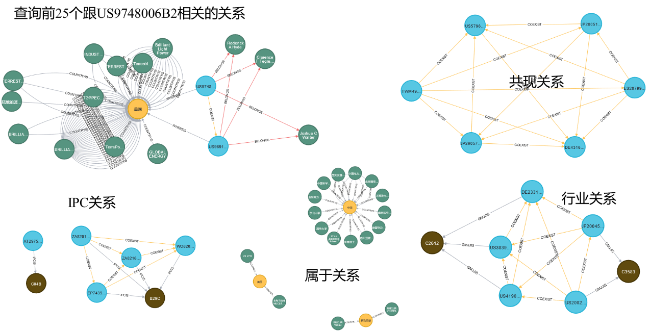
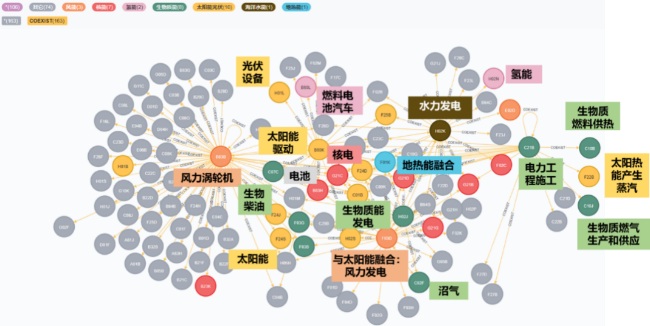
图6 低碳领域知识图谱实体关系示例Figure 6 Example of entity relationship in the low-carbon knowledge graph |
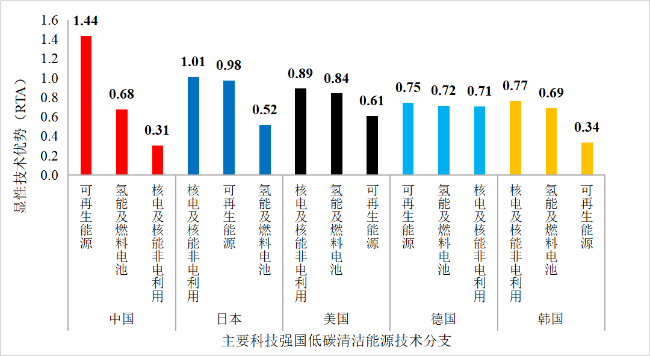
图10 主要科技强国低碳清洁能源专利显性优势Figure 10 Revealed comparative advantages of low-carbon and clean energy patents among major technological powers |
表3 基于7种能源全数据集IPC前4位分类号数量Table 3 IPC subclass distribution (top 4 codes) across seven energy datasets |
| 能源 IPC | 物理 | 运输 | 化学 | 建筑 | 机械 | 电学 |
|---|---|---|---|---|---|---|
| 核能 | 215 | 98 | 269 | 2 | 84 | 62 |
| 风能 | 584 | 602 | 176 | 466 | 7 687 | 4 418 |
| 太阳能 | 632 | 557 | 706 | 420 | 4 827 | 4 607 |
| 生物质能 | 3 | 297 | 1 799 | 2 | 183 | 164 |
| 海洋能 | 19 | 301 | 83 | 124 | 4 329 | 249 |
| 地热能 | 9 | 16 | 20 | 81 | 847 | 66 |
| 氢能 | 178 | 598 | 2640 | 31 | 902 | 737 |
表4 基于7种能源技术分类体系IPC前4位分类号种类Table 4 Diversity of IPC subclasses (top 4 codes) in seven energy technology categories |
| 能源 IPC | 物理G | 运输B | 化学C | 建筑E | 机械F | 电学H | 低碳Y02 |
|---|---|---|---|---|---|---|---|
| 核能 | 12 | 2 | 1 | 2 | 1 | 0 | 3 |
| 风能 | 0 | 6 | 1 | 2 | 15 | 8 | 6 |
| 太阳能 | 1 | 1 | 2 | 2 | 25 | 33 | 17 |
| 生物质能 | 1 | 2 | 24 | 1 | 5 | 1 | 0 |
| 海洋能 | 0 | 2 | 1 | 4 | 9 | 1 | 2 |
| 地热能 | 0 | 0 | 0 | 2 | 12 | 2 | 1 |
| 氢能 | 0 | 1 | 0 | 2 | 1 | 1 | 4 |
表5 7种低碳清洁能源专利技术关联度Table 5 Technological correlation of seven low-carbon and clean energy patents |
| 能源 | 核能 | 风能 | 太阳能 | 生物质能 | 地热能 | 海洋能 | 氢能 |
|---|---|---|---|---|---|---|---|
| 核能 | 1.000 0 | ||||||
| 风能 | 0.000 3 | 1.000 0 | |||||
| 太阳能 | 0.001 5 | 0.083 5 | 1.000 0 | ||||
| 生物质能 | 0.000 2 | 0.001 1 | 0.002 9 | 1.000 0 | |||
| 地热能 | 0.000 9 | 0.167 5 | 0.077 8 | 0.001 0 | 1.000 0 | ||
| 海洋能 | 0.000 2 | 0.167 5 | 0.024 1 | 0.001 1 | 0.018 9 | 1.000 0 | |
| 氢能 | 0.007 5 | 0.009 7 | 0.012 0 | 0.037 8 | 0.005 8 | 0.011 5 | 1.000 0 |
| [1] |
|
| [2] |
|
| [3] |
|
| [4] |
蔡睿, 朱汉雄, 李婉君, 等. “双碳”目标下能源科技的多能融合发展路径研究[J]. 中国科学院院刊, 2022, 37(4): 502-510.
|
| [5] |
|
| [6] |
|
| [7] |
National Nuclear Laboratory. Unlocking the UK’s nuclear hydrogen economy to support net zero[EB/OL]. [2025-06-07].
|
| [8] |
The U.S. Department of Energy. Nuclear hydrogen R&D plan[EB/OL]. [2025-06-07].
|
| [9] |
|
| [10] |
|
| [11] |
国家知识产权局. 国家知识产权局办公室关于印发《战略性新兴产业分类与国际专利分类参照关系表(2021)(试行)》的通知[EB/OL]. [2025-06-07].
China National Intellectual Property Administration. Notice of the General Office of the China National Intellectual Property Administration on the Issuance of the Relationship Table of Strategic Emerging Industry Classification and International Patent Classification (2021) (Trial)[EB/OL]. [2025-06-07].
|
| [12] |
国家知识产权局. 关于印发《国际专利分类与国民经济行业分类参照关系表(2018)》的通知[EB/OL]. [2025-06-07].
China National Intellectual Property Administration. Notice on issuing the Reference Table of International Patent Classification and National Economic Industry Classification (2018)[EB/OL]. [2025-06-07].
|
| [13] |
World Intellectual Property Organization. Ipc green inventory[EB/OL]. [2025-06-07].
|
| [14] |
United States Patent and Trademark Office. CPC scheme - Y02E Reduction of Greenhouse Gas [GHG] Emissions, related to energy generation, transmission or distribution[EB/OL]. [2025-06-07].
|
| [15] |
United States Patent and Trademark Office. Environmentally sound technologies (est) concordance[EB/OL]. [2025-06-07].
|
| [16] |
Ministry of Economy, Trade and Industry. A technologies inventory has been developed for the purpose of analyzing green transformation (GX) technologies based on patent information[EB/OL]. [2025-06-07].
|
| [17] |
王凤娟, 徐玖平. 多能互补发电系统:概念框架、知识图谱与集成优化[J]. 中国管理科学, 2025, 33(1): 62-75.
|
| [18] |
葛鑫博, 黄俊, 赵同彬, 等. 基于知识图谱的地下压缩空气储能研究进展[J]. 煤炭科学技术, 2025, 53(4): 80-103.
|
| [19] |
|
| [20] |
|
| [21] |
|
| [22] |
|
| [23] |
|
| [24] |
|
| [25] |
|
| [26] |
|
| [27] |
|
| [28] |
|
| [29] |
|
| [30] |
|
| [31] |
|
| [32] |
|
| [33] |
|
| [34] |
|
| [35] |
|
| [36] |
|
| [37] |
|
| [38] |
|
| [39] |
|
/
| 〈 |
|
〉 |