

The General-Purpose AI Code of Practice:Interpretation and Archival Implications for AI Models
- Wang Menghan 1, 2 ,
- Wu Zhijie 1, 3 ,
- Zhang Jing 1, 2, 3
Abstract
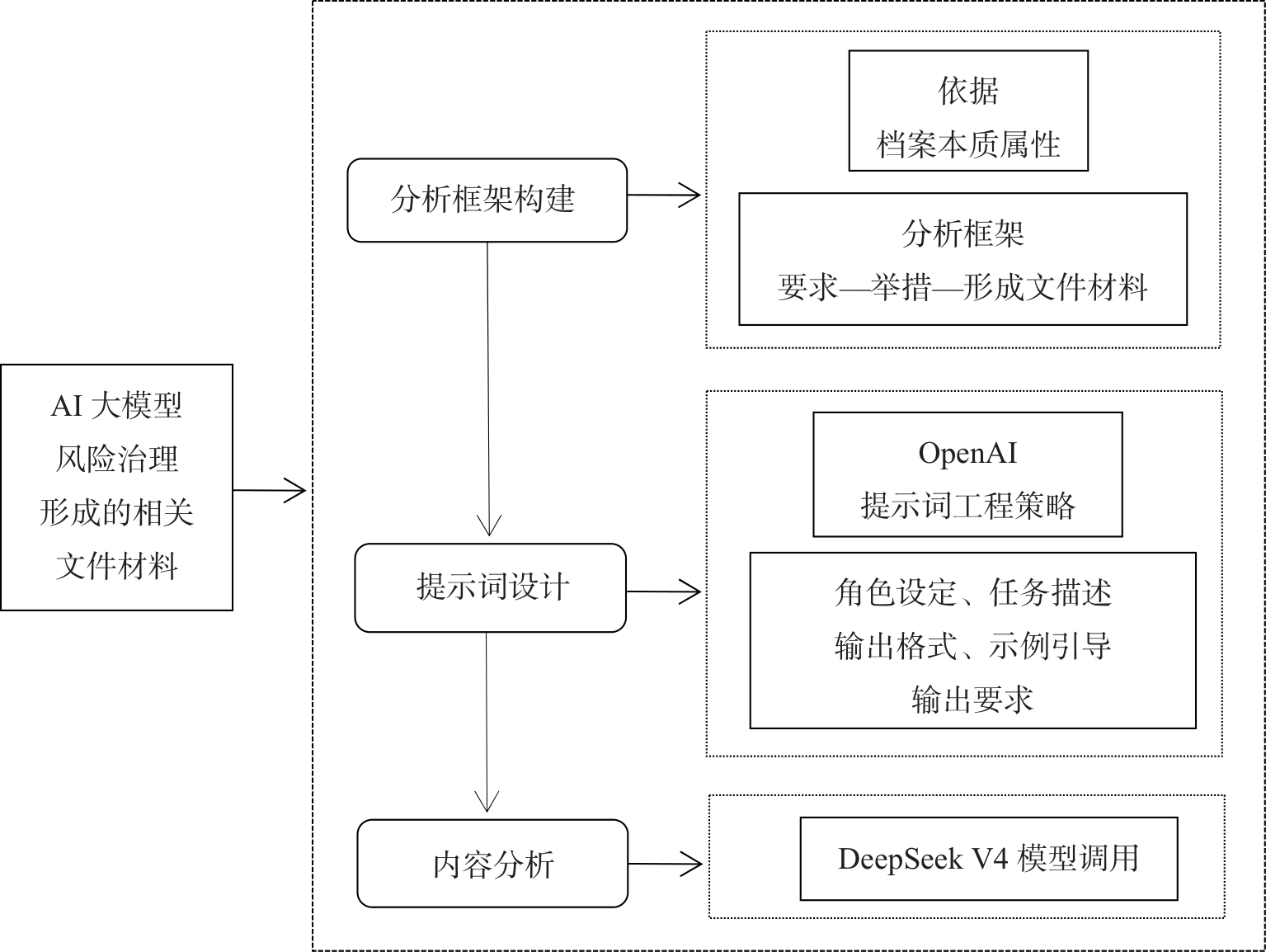
[Purpose/Significance] The development and application of AI models are subject to specific regulatory requirements covering tiered risk regulation and dynamic full-lifecycle governance, resulting in archiving characteristics distinct from those of conventional information management systems or platforms. Research on the archiving of AI models can keep pace with the evolving landscape of artificial intelligence and enrich both the theory and practice of archival management. [Method/Process] This paper took the General-Purpose AI Code of Practice as the research object. It applied the BERTopic model for topic identification to outline the requirements and major risks concerning the development and application of AI models in the Code of Practice, and employed the DeepSeek V4 model for content extraction to summarize the documents and materials formed for risk governance. Based on this, the paper systematically analyzed and interpreted the Code of Practice from three dimensions: emphasizing tiered risk regulation for AI models, implementing dynamic full-lifecycle governance, and discussed how archival institutions, as back-end management subjects, should actively respond to the above requirements and risks. [Result/Conclusion] Based on the above analysis, this paper proposes that archival institutions can advance the archiving of AI models from three dimensions: implementing tiered archiving matching risk governance, clarifying full-lifecycle archiving specifications, and optimizing the scope of records collection oriented toward risk management, to provide references for the domestic practice of AI models archiving in China.
Key words
the General-Purpose AI Code of Practice / archiving of AI models / risk management / full lifecycle archiving
{{custom_sec.title}}
{{custom_sec.title}}
References
| [1] |
贺谭涛.档案学视角下的人工智能文档: 范畴界定、管理挑战与探索方向[J]. 档案学通讯, 2026(4): 39-47.
|
| [2] |
连志英, 蒋玲.面向人工智能治理的人工智能文档的作用及其构成研究[J]. 图书情报工作, 2026, 70(9): 148-156.
|
| [3] |
张茜雅, 刘越男.并行数据: 人工智能应用背景下档案管理的新议题[J]. 浙江档案, 2025(7): 14-19.
|
| [4] |
王阿陶.“算法档案”的概念内涵、治理理念与实现机制[J]. 档案学研究, 2026(2): 30-39.
|
| [5] |
连志英, 苏立.档案学视角下算法来源的内涵及其要素构成[J]. 档案学通讯, 2025(3): 29-37.
|
| [6] |
裴佳杰, 张斌.AIGC归档的逻辑理路与冲突解构[J]. 情报科学, 2025, 43(8): 100-108.
|
| [7] |
王玉珏, 樊静雅, 温翰英.人工智能生成合成内容的可信存档策略研究——基于对电子档案“四性”的思考[J]. 北京档案, 2025(4): 22-29.
|
| [8] |
|
| [9] |
蔡盈芳.科学界定科研文件材料的归档范围并准确划分科研档案保管期限[J]. 中国档案, 2021(5): 44-45.
|
| [10] |
深度求索.DeepSeek-V4预览版: 迈入百万上下文普惠时代[EB/OL]. [2026-05-30].
DeepSeek. DeepSeek-V4 preview: entering the era of accessible million-token context[EB/OL]. [2026-05-30].
|
| [11] |
徐拥军, 闫静.中国特色档案学的基本范畴与核心命题[J]. 中国图书馆学报, 2024, 50(3): 30-46.
|
| [12] |
田泽懿, 张靖琦.基于生命周期的大模型安全审视: 风险梳理与防范机制[J]. 工业信息安全, 2025(4): 20-28.
|






/
| 〈 |
|
〉 |