
Research on the Ecological Mechanism of Online Information Content in the Context of Generative Artificial Intelligence

Liu Ting, Zhou Jia, Xu Xiaofang, Hu Yuan

Knowledge Management Forum ›› 2026, Vol. 11 ›› Issue (4) : 0.

Knowledge Management Forum ›› 2026, Vol. 11 ›› Issue (4) : 0. DOI: 10.13266/j.issn.2095-5472.2026.027  CSTR: 32306.14.j.issn.2095-5472.2026.027

Research on the Ecological Mechanism of Online Information Content in the Context of Generative Artificial Intelligence

Author information +
History +

Abstract

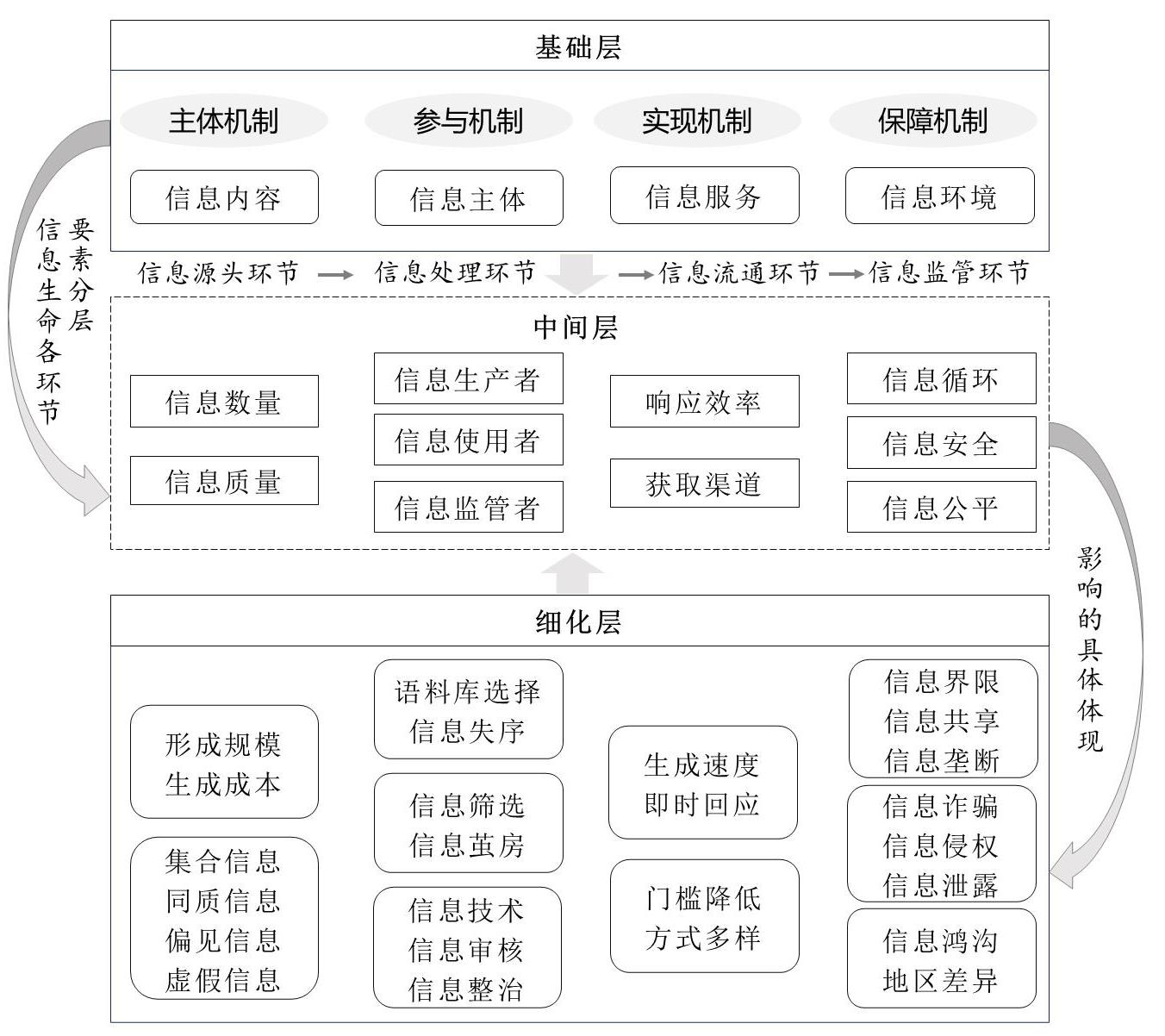
[Purpose/Significance] This paper explores the impact of the development of generative artificial intelligence on the ecological mechanism of network information content, and provides a role in optimizing the ecological mechanism of network information content and improving the efficiency of information utilization. [Method/Process] This paper adopted the grounded theory research method to carry out open coding, axial coding and selective coding on the literature and policy documents related to the ecological mechanism of generative artificial intelligence and network information content, and construct the ecological mechanism of network information content under the background of generative artificial intelligence including subject mechanism, participation mechanism, realization mechanism and guarantee mechanism. Then, the mutual influence relationship within the ecological mechanism of network information content was analyzed, and the influence path of generative artificial intelligence on the mechanism of network information content was analyzed. On this basis, the application of self-media platform AI was selected as a case to verify the rationality of the four influence paths. [Result/Conclusion] The study finds that the overall analytical logic of generative artificial intelligence with respect to the subject mechanism, participation mechanism, realization mechanism, and guarantee mechanism follows the chain: generative artificial intelligence-information content-information subjects-information services-information environment. Moreover, all four influence pathways have been effectively validated through case studies on self-media platforms. This not only confirms the rationality and feasibility of each pathway, but also fully demonstrates the systematic and dynamic nature of generative artificial intelligence's impact on information content. Finally, some suggestions are put forward to optimize the ecological mechanism of network information content under the background of generative artificial intelligence: it is necessary to standardize the dissemination of generated synthetic content, strictly review the selection of generated model corpus, strengthen the ability of user information judgment and information screening, and clarify the copyright issues involved in generated content.
Key words

network information content ecology / generative artificial intelligence / grounded theory / influence mechanism

Cite this article

Download Citations
Liu Ting , Zhou Jia , Xu Xiaofang , et al. Research on the Ecological Mechanism of Online Information Content in the Context of Generative Artificial Intelligence[J]. Knowledge Management Forum. 2026, 11(4): 0 https://doi.org/10.13266/j.issn.2095-5472.2026.027

References

[1]
张力, 何振, 毛太田. 生成式人工智能信息获取对信息茧房的双刃剑效应[J]. 情报资料工作, 2026, 47(3): 104-112.
Zhang Li, He Zhen, Mao Taitian. "Breaking the Cocoon" or "Spinning one"? the double-edged sword effect of generative artificial intelligence information acquisition on information cocoons[J]. Information and documentation services, 2026, 47(3): 104-112.
[2]
张庆锋. 网络生态论[J]. 情报资料工作, 2000(4): 2-4.
Zhang Qingfeng. Network ecology theory [J]. Information and documentation services, 2000(4): 2-4.
[3]
魏傲希, 马捷, 韩朝. 网络信息生态系统自我调整能力及实现机制研究[J]. 图书情报工作, 2014, 58(15): 14-21.
Wei Aoxi, Ma Jie, Han Cao. Study on the self-adjustment and the implementation mechanism of the network information ecosystem[J]. Library and information service, 2014, 58(15): 14-21.
[4]
Yin X, Chen X, Duan Y, et al. Research on SVM and apply to network information content audit[J]. Computer engineering and design, 2012, 33(4): 1266-1270.
[5]
娄策群, 李青维, 娄冬. 网络信息生态环境中的信息制度环境优化研究[J]. 图书馆学研究, 2016(23): 2-6.
Lou Cequn, Li Qingwei, Lou Dong. Research on the optimization of information institutional environment in network information ecology[J]. Research on library science, 2016(23): 2-6.
[6]
He Hongyang, Zhang Bin. Effective synergy of market agents: the core of achieving multi-agent governance on the internet platform[J]. Sustainability, 2022, 14(24): 20.
[7]
张新新, 黄如花. 生成式智能出版的应用场景、风险挑战与调治路径[J]. 图书情报知识, 2023, 40(5): 77-86, 27.
Zhang Xinxin, Huang Ruhua. Application scenarios, risk challenges and regulatory pathways of generative intelligent publishing[J]. Documentation, information & knowledge, 2023, 40(5): 77-86, 27.
[8]
李荣, 吴晨生, 董洁, 等. ChatGPT对开源情报工作的影响及对策[J]. 情报理论与实践, 2023, 46(5): 1-5.
Li Rong, Wu Chensheng, Dong Jie, et al. Study on the impact of ChatGPT on open source intelligence work and countermeasures[J]. Information studies: theory & application, 2023, 46(5): 1-5.
[9]
漆晨航. 生成式人工智能的虚假信息风险特征及其治理路径[J]. 情报理论与实践, 2024, 47(3): 112-120.
Qi Chenhang. Research on the risks of disinformation from generative artificial intelligence and its governance paths[J]. Information studies: theory & application, 2024, 47(3): 112-120.
[10]
侯东德, 张丽萍. 生成式人工智能背景下网络信息生态风险的法律规制[J]. 社会科学研究, 2023(6): 93-104.
Hou Dongde, Zhang Liping. Legal regulation of network information ecological risks under the background of generative artificial intelligence[J]. Social science research, 2023(6): 93-104.
[11]
薛志华. 生成式人工智能对网络信息内容治理的挑战及应对[J]. 中国广播电视学刊, 2023(10): 13-16.
Xue Zhihua. Challenges and responses of generative artificial intelligence to network information content governance[J]. Social science research, 2023(10): 13-16.
[12]
赵梓羽. 生成式人工智能数据安全风险及其应对[J]. 情报资料工作, 2024, 45(2): 30-37.
Zhao Ziyu. Data security risks and countermeasures of generative artificial intelligence[J]. Information and documentation services, 2024, 45(2): 30-37.
[13]
Du Hongyang, Li Zonghang, Niyato D, et al. Enabling AI-generated content services in wireless edge networks[J]. IEEE wireless communications, 2024, 31(3): 226-234.
[14]
储节旺, 罗怡帆, 李佳轩. AIGC对信息生成方式及用户信息行为的影响[J]. 图书情报工作, 2023, 67(24): 13-23.
Chu Jiewang, Luo Yifan, Li Jiaxuan. The influence of AIGC on information generation mode and user information behavior[J]. Library and information service, 2023, 67(24): 13-23.
[15]
Li Fan, Yang Ya. Impact of artificial intelligence-generated content labels on perceived accuracy, message credibility, and sharing intentions for misinformation: Web-based, randomized, controlled experiment [J]. JMIR formative research, 2024, 8: e60024.
[16]
苏君华, 宋雯琪. 人工智能生成内容技术赋能下的集群式信息攻防研究综述[J]. 情报理论与实践, 2024, 47(9): 9-21.
Su Junhua, Song Wenqi. Review of cluster-based information offense and defense research empowered by AIGC technology[J]. Information studies: theory & application, 2024, 47(9): 9-21.
[17]
王贇芝, 王欣昱, 陈洁. 面向网络信息内容生态治理的旁观者用户干预意愿触发机理研究[J]. 情报资料工作, 2024, 45(6): 66-74.
Wang Yunzhi, Wang Xinyi, Chen Jie. Research on the triggering mechanism of bystander users intervention intention for network information content ecological governance[J]. Information and documentation services, 2024, 45(6): 66-74.
[18]
严炜炜, 宋佳慧, 王妍妍. 基于制度文本分析的网络信息内容生态协同治理研究[J]. 图书情报知识, 2024, 41(5): 115-127.
Yan Weiwei, Song Jiahui, Wang Yanyan. Ecological collaborative governance of network information content based on institutional text analysis[J]. Documentation, information & knowledge, 2024, 41(5): 115-127.
[19]
Guo Danhuai, Chen Huixuan, Wu Ruoling, et al. AIGC challenges and opportunities related to public safety: a case study of ChatGPT[J]. Journal of safety science and resilience, 2023, 4(4): 329-339.
[20]
聂冰, 王婷, Lund B D. 生成式人工智能时代学术信息失序问题治理研究——以ChatGPT为例[J]. 机器人产业, 2024(1): 103-108.
Nie Bing, Wang Ting, Lund B D. Research on the governance of academic information disorder in the era of generative artificial intelligence: a case study of ChatGPT[J]. Robot industry, 2024(1): 103-108.
[21]
喻国明, 金丽萍. 生成式媒介的极致优化: DeepSeek对传播生态的系统性影响[J]. 新疆师范大学学报(哲学社会科学版), 2025(4): 1-9.
Yu Guoming, Jin Liping. The ultimate optimization of generative media: DeepSeek's systemic impact on the communication ecosystem[J]. Journal of Xinjiang normal university(edition of philosophy and social sciences), 2025(4): 1-9.
[22]
Wang Tao, Zhang Yushu, Qi Shuren, et al. Security and privacy on generative data in AIGC: a survey[J]. ACM computing surveys, 2025, 57(4): 1-34.
[23]
张瑞娟. 生成式人工智能驱动信息资源组织与服务研究向度质性分析与反思[J]. 档案管理, 2024(3): 19-21.
Zhang Ruijuan. Qualitative analysis and reflection on the research dimensions of information resource organization and service driven by generative artificial intelligence[J]. Archives management, 2024(3): 19-21.
[24]
曾森. 生成式人工智能与国家治理信息机制变革: 以ChatGPT为例[J]. 理论月刊, 2024(8): 82-94.
Zeng Sen. Generative artificial intelligence and the transformation of national governance information mechanisms: a case study of ChatGPT[J]. Theory monthly, 2024(8): 82-94.
[25]
梁怀新, 宋诚. AIGC时代的网络信息内容生态安全风险及其治理——兼以ChatGPT为对象的实验访谈案例分析[J]. 图书情报工作, 2023, 67(20): 58-69.
Liang Huaixin, Song Cheng. Ecological security risk and governance of network information content in AIGC era——take ChatGPT as an example[J]. Library and information service, 2023, 67(20): 58-69.
[26]
李孟瑶. 生成式人工智能浪潮下的内容生产革新[J]. 全媒体探索, 2024(6): 136-138.
Li Mengyao. Content production innovation under the wave of generative artificial intelligence[J]. All-media explorations, 2024(6): 136-138.
[27]
支振锋. 生成式人工智能大模型的信息内容治理[J]. 政法论坛, 2023, 41(4): 34-48.
Zhi Zhenfeng. Information content governance of large model of generative artificial intelligence[J]. Tribune of political science and law, 2023, 41(4): 34-48.
[28]
张涛甫. 人工智能推动舆论生态转型及其治理进路[J]. 学术月刊, 2024, 56(2): 149-157.
Zhang Taofu. When artificial intelligence involves in the ecology of public opinion: structure, discourse and governance[J]. Academic monthly, 2024, 56(2): 149-157.
[29]
徐腾飞. 生成式人工智能阅读推广与读者思维的信息茧房[J]. 图书情报导刊, 2024, 9(1): 25-31.
Xu Tengfei. Generative artificial intelligence reading promotion and information cocoon for reader thinking[J]. Journal of library and information science, 2024, 9(1): 25-31.
[30]
李瑾颉, 吴联仁, 齐佳音. 对抗AIGC虚假信息的行为助推与认知干预研究[J]. 青年记者, 2025, (5): 53-57.
Li Jinxie, Wu Lianren, Qi Jiayin. Research on behavioral nudging and cognitive intervention against AIGC misinformation[J]. Youth journalist, 2025, (5): 53-57.
[31]
蒙新梦. 生成式人工智能对话式搜索对个人用户信息搜寻行为的影响研究[J]. 社会科学前沿, 2024, 13(7): 591-598.
Meng Xinmeng. Impact of generative artificial intelligence conversational search on individual users' information-seeking behavior[J]. Advances in social sciences, 2024, 13(7): 591-598.
[32]
宋行健. 生成式人工智能处理信息的法律风险应对[J]. 黑龙江省政法管理干部学院学报, 2024(5): 129-135.
Song Xingjian. Legal risk response to information processing by generative artificial intelligence[J]. Journal of Heilongjiang administrative cadre college of politics and law, 2024(5): 129-135.
[33]
吴进, 王立杰, 昝栋. DeepSeek赋能高校图书馆信息服务提升研究——以中国海洋大学图书馆为例[J].高校图书馆工作, 2025, 45(2): 22-29.
Wu Jin, Wang Lijie, Zan Dong. Reflection on current alienation phenomena in Chinese libraries[J]. Library work in colleges and universities, 2025, 45(2): 22-29.
[34]
张欣. 面向产业链的治理: 人工智能生成内容的技术机理与治理逻辑[J]. 行政法学研究, 2023(6): 43-60.
Zhang Xin. Industry chain-oriented governance: technological mechanisms and governance logic in the management of artificial intelligence generated content[J]. Administrative law review, 2023(6): 43-60.
[35]
丁亚南. 人工智能生成内容的传播风险及其法律规制研究[J]. 四川轻化工大学学报(社会科学版), 2025(4): 1-12.
Ding Yanan. The dissemination risks of artificial intelligence generated contents and their legal regulations[J]. Journal of Sichuan University of Science & Engineering(social sciences edition), 2025(4): 1-12.
[36]
Yang Weiquan, Lu Zhaolin, Li Zengrui, et al. The impact of human-AIGC tools collaboration on the learning effect of college students: a key factor for future education?[J]. Kybernetes, 2024, 54(15): 7746-7763.
[37]
Li Chenxi, Lin Yixun, Chen Ruqing, et al. How do users adopt AI-generated content (AIGC)? an exploration of content cues and interactive cues[J]. Technology in society, 2025, 81: 102830.

Funding

This work is supported by the National Social Science Fund of China, titled "Research on the Value Formation Mechanism and Release Path of Online Health Data Elements"(24CTQ047)

Accesses

Citation

Detail

Sections
Recommended

/