PDF(4180 KB)

A Study on the Reproducibility of Digital Humanities Research and the Governance Mechanisms of Academic Journals
Li Shaojian
Knowledge Management Forum ›› 2026, Vol. 11 ›› Issue (1) : 68-75.
PDF(4180 KB)
 PDF(4180 KB)
A Study on the Reproducibility of Digital Humanities Research and the Governance Mechanisms of Academic Journals
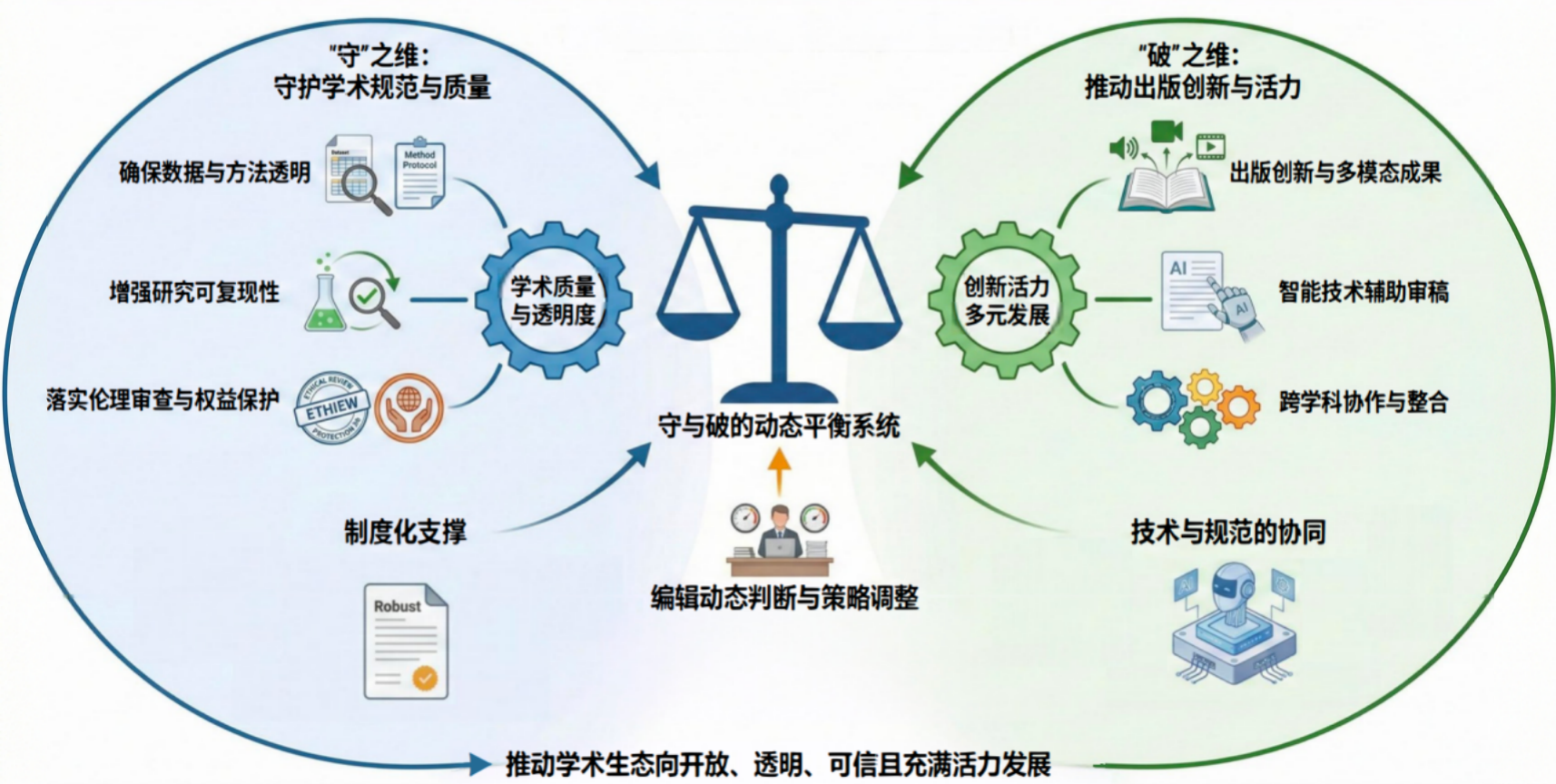
[Purpose/Significance] Against the background of the increasingly prominent reproducibility issues in digital humanities research, this paper systematically analyzes the challenges posed by data complexity, methodological heterogeneity, and the multimodal nature of research outputs to research verifiability, and explores the critical role of academic journals in institutional regulation and technical governance. [Method/Process] From the three dimensions of data, methods, and research outputs, the paper examined the dilemmas of reproducibility and, on this basis, introduced an analytical framework of “boundary-keeping, boundary-breaking, and their dynamic balance”. By integrating data publishing, platform-based collaboration, intelligent empowerment, and human-machine collaboration mechanisms, it constructed practical pathways through which journals can enhance reproducibility. [Result/Conclusion] It is argued that journals should achieve transparent and traceable management of the entire research process through standardized data collection and metadata specifications, centralized platform management, intelligent quality control, and human–machine collaborative peer review. The study concludes that academic journals need to maintain a dynamic balance between safeguarding academic norms and promoting publishing innovation, gradually forming an integrated “data–methods–publishing” ecosystem, so as to enhance the credibility, reproducibility, and academic impact of digital humanities research, and to provide institutional support for building an open, transparent, and sustainable scholarly publishing system.
digital humanities / reproducibility / data publishing / journal governance
| [1] |
王元新, 邵亚伟, 黄金霞. 开放科学时代下的可复现性危机与机遇[J]. 科学学研究, 2025, 43(7): 1411-1420.
|
| [2] |
侯碧艳. 档案与文化遗产的数字人文应用研究分析与展望[J]. 档案管理, 2025(3): 45-47, 52.
|
| [3] |
张扬明. 自下而上的冲突地区数字文化遗产保护模式探讨——以“在线拯救乌克兰文化遗产”(SUCHO)行动为例[J]. 数字人文研究, 2023, 3(3): 49-58.
|
| [4] |
周耀林, 吴化. 数字人文视野下少数民族档案文献遗产数字化保护研究[J]. 档案学研究, 2022(5): 123-129.
|
| [5] |
张亚静, 程芸. 数字人文研究中工程学思维与文学思维的融合——关于“古典戏曲文本分析与智能再造平台”的建设经验[J]. 数字人文, 2024(2): 37-49.
|
| [6] |
王娟, 王海刚, 郑勇. 数字人文背景下口述历史档案资源文本挖掘及可视化分析——以陕西科技大学口述历史档案资源为例[J]. 兰台世界, 2023(4): 42-46.
|
| [7] |
束锡红, 樊丹丹, 王阳. 数字人文视阈下英法藏西夏出土文献文本分析[J]. 敦煌学辑刊, 2025(2): 115-130.
|
| [8] |
巴克尔斯, 格罗特科普, 舍雷尔, 等. 表演艺术与数字人文:将计算分析与人类体验相匹配[J]. 数字人文研究, 2025, 5(2): 59-87.
|
| [9] |
钮亮, 项玮. 数字人文视域下中国画论观念演进与艺术活力测度研究[J]. 信息与管理研究, 2025, 10(4): 11-19.
|
| [10] |
贾力, 汪燕翎. 从数据聚合到数字素养——数字人文视角下艺术图像库建设的现状与展望[J]. 数字人文, 2025(1): 70-85.
|
| [11] |
|
| [12] |
黄小龙, 杨婧如, 柳熠, 等. ReproLink:面向可复现性的科研数据管理系统[J]. 软件学报, 2025, 36(12): 5801-5820.
|
| [13] |
张旭, 刘芳妤, 毛宁, 等.我国数字人文领域研究方法的应用与反思[J]. 图书情报工作, 2025, 69(16): 139-150.
|
| [14] |
柳畅. 2024 IDEC东亚古籍数字人文国际论坛综述[J]. 数字人文, 2025(1): 198-207.
|
| [15] |
范文豪, 赵宇翔, 李金昊, 等.计算扎根理论的方法演进及其在数字人文研究中的应用[J]. 图书馆论坛, 2026, 46(1): 11-23.
|
| [16] |
张逸勤, 邓三鸿, 王凡铭, 等. 国家文化数字化战略下的数字人文学科研究:发展趋势与演进逻辑[J]. 情报科学, 2025, 43(6): 181-192.
|
| [17] |
范军, 钟准健. 数字人文视域下学术出版的数字变革与发展启示[J]. 中国数字出版, 2024, 2(3): 46-55.
FAN J, ZHONG Z J, The academic publishing in the digital humanities perspective enlightenment for change and development[J]. China digital publishing, 2024, 2(3): 46-55.
|
| [18] |
叶志飞, 吴振新, 李涵昱, 等. 可信预印本平台框架与路径构建[J]. 农业图书情报学报, 2025, 37(10): 67-77.
|
| [19] |
Journal of Open Humanities Data.About[EB/OL]. [2025-11-11].
|
| [20] |
江波, 王伯扬. AI辅助学术期刊同行评议:必要、可行与可为[J]. 中国编辑, 2025(11): 26-33.
|
/
| 〈 |
|
〉 |