PDF(3409 KB)

Information Transparency and Consumer Education: Governance Strategies to Counter "Big Data Price Discrimination"
Chen Jinghao, Deng Zhiyuan, Chen Yide
Knowledge Management Forum ›› 2025, Vol. 10 ›› Issue (6) : 516-534.
PDF(3409 KB)
 PDF(3409 KB)
Information Transparency and Consumer Education: Governance Strategies to Counter "Big Data Price Discrimination"
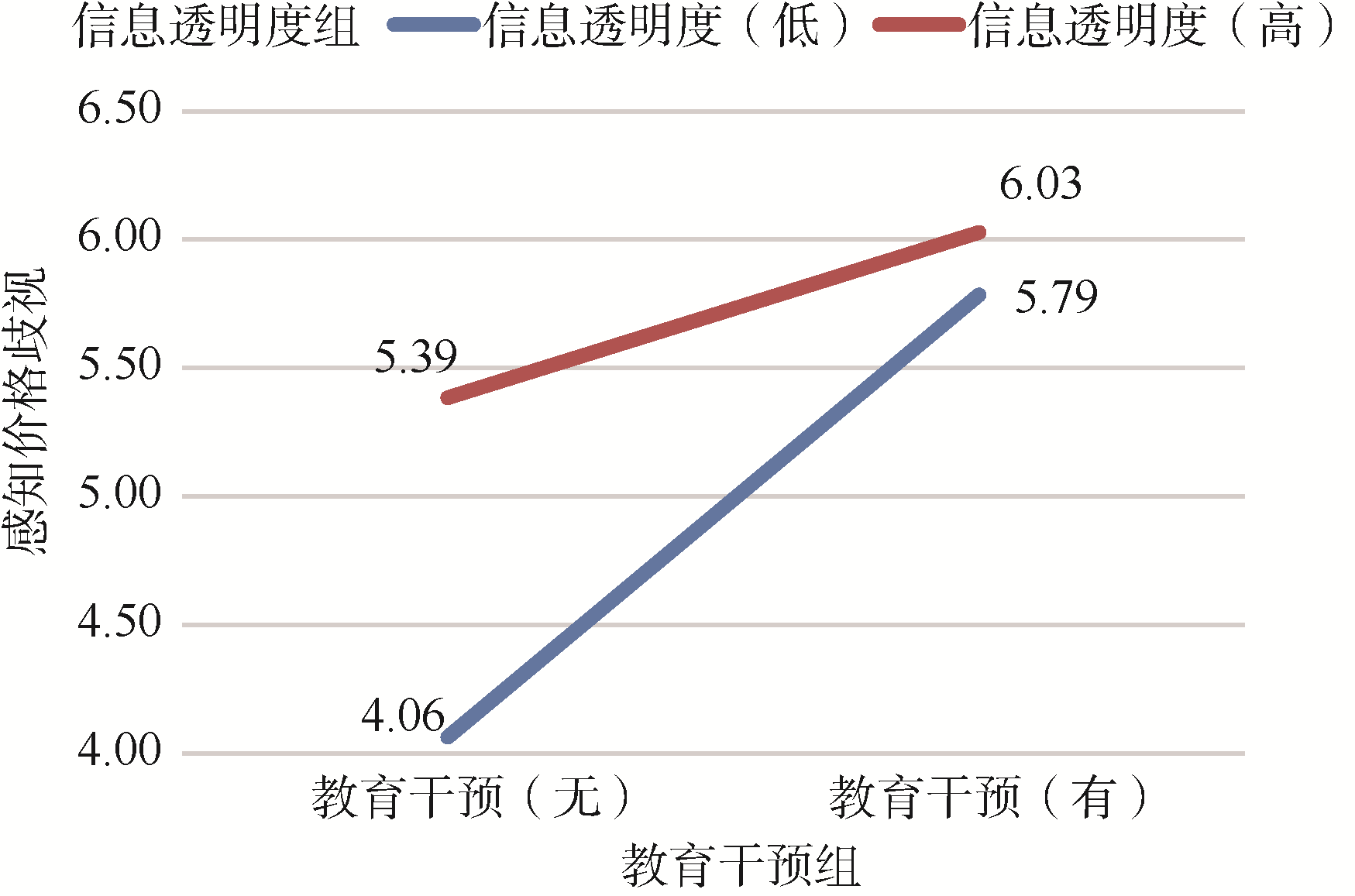
[Purpose/Significance] Addressing the issue of "big data price discrimination" in the digital economy, which severely undermines consumer rights and market fairness, this study focuses on two key governance strategies: information transparency and consumer education. It explores their synergistic efficacy in countering this phenomenon to foster a fair digital market with multi-stakeholder participation. [Method/Process] Based on information asymmetry theory, equity theory, and information processing theory, the research employs two 2×2 scenario-based experiments (food package ordering and hotel booking) to examine the interactive effect of information transparency and consumer education on perceived price discrimination, and analyzes the mediating effect of perceived price fairness. [Result/Conclusion] The results indicate that the interaction between information transparency and consumer education significantly enhances consumers' perception of price discrimination. While enhancing either strategy individually improves recognition ability, their combined effect yields more pronounced results. Perceived price fairness partially mediates this interactive influence: improvements in information transparency and consumer education enhance consumers' understanding of pricing procedures, thereby increasing their perception of fairness and indirectly mitigating their ultimately negative judgments.
information transparency / consumer education / big data price discrimination
| [1] |
李飞翔. “大数据杀熟”背后的伦理审思、治理与启示[J]. 东北大学学报(社会科学版), 2020, 22(1): 7-15.
|
| [2] |
梁正, 曾雄. “大数据杀熟”的政策应对: 行为定性、监管困境与治理出路[J]. 科技与法律(中英文), 2021(2): 8-14.
|
| [3] |
汪庆华. 算法透明的多重维度和算法问责[J]. 比较法研究, 2020(6): 163-173.
|
| [4] |
|
| [5] |
许明月, 陈小维. “大数据杀熟”行为的法律规制——以消费者权益保护为视角[J]. 西南石油大学学报(社会科学版), 2021, 23(6): 72-80.
|
| [6] |
王秋梅. “大数据杀熟”的演变轨迹、治理困境与协同共治[J]. 南京邮电大学学报(社会科学版), 2025, 27(3):72-79, 108.
|
| [7] |
|
| [8] |
承上. 人工智能时代个性化定价行为的反垄断规制——从大数据杀熟展开[J]. 中国流通经济, 2020, 34(5): 121-8.
|
| [9] |
胡元聪, 冯一帆. 大数据杀熟中消费者公平交易权保护探究[J]. 陕西师范大学学报(哲学社会科学版), 2022, 51(1): 161-76.
|
| [10] |
姚佳. 个人信息主体的权利体系——基于数字时代个体权利的多维观察[J]. 华东政法大学学报, 2022, 25(2): 87-99.
|
| [11] |
吴志艳, 罗继锋. 算法价格歧视和顾客感知背叛[J]. 上海对外经贸大学学报, 2022, 29(5): 108-124.
|
| [12] |
张惠舒, 赵宇翔, 宋士杰. 信息弱势群体算法素养的形成机理与影响因素——以短视频平台为例[J]. 图书情报知识, 2024, 41(2): 127-137.
|
| [13] |
郑鹏程, 龙森. 公共性视角下平台“大数据杀熟”的规制逻辑与路径[J]. 吉首大学学报(社会科学版), 2022, 43(6): 29-40.
|
| [14] |
郑海英. 数字经济时代电商平台定价策略选择研究——基于价格透明度的分析[J]. 价格理论与实践, 2019(11): 121-124.
|
| [15] |
|
| [16] |
苏岚岚, 彭艳玲. 数字化教育、数字素养与农民数字生活[J]. 华南农业大学学报(社会科学版), 2021, 20(3): 27-40.
|
| [17] |
|
| [18] |
|
| [19] |
|
| [20] |
|
| [21] |
|
| [22] |
|
| [23] |
邓湘雪. 顾客教育对顾客感知质量和顾客承诺关系的调节作用——以理财产品为例[D]. 长春: 东北师范大学, 2015.
|
| [24] |
|
| [25] |
游志强. 大数据杀熟对消费者持续使用意愿的影响研究[D]. 泉州: 华侨大学, 2021.
|
| [26] |
|
| [27] |
|
| [28] |
|
| [29] |
邓胜利, 许家辉, 夏苏迪. 数字环境下大学生算法素养评价体系及实证研究[J]. 图书情报工作, 2023, 67(2): 23-32.
|
| [30] |
夏苏迪, 邓胜利, 付少雄, 等. 数智时代的算法素养: 内涵、范畴及未来展望[J]. 图书情报知识, 2023, 40(1): 23-34.
|
| [31] |
张明鑫, 朱侯. 隐私政策“霸王条款”特征及其作用机制的内容分析[J]. 情报学报, 2023, 42(9): 1092-1102.
|
| [32] |
|
陈璟浩:提出研究构思,进行正式分析,获取经费资助,设计研究方法,指导研究过程;
邓至媛:管理实验数据,进行正式分析,开展调查工作,完成数据可视化,撰写论文初稿;
陈一德:进行正式分析,验证实验结果,开展调查工作,修改论文并定稿。
/
| 〈 |
|
〉 |