数字健康素养对大学生在线健康信息获取的影响研究
作者贡献声明/Author contributions:
曹高辉:研究思路和方法指导,论文修改;
李园园:研究思路设计,数据收集与分析,论文撰写与修改;
董焕晴:研究思路指导,论文修改。
|
曹高辉,华中师范大学信息管理学院院长,教授,博士; |
|
李园园,硕士研究生 |
收稿日期: 2026-04-10
网络出版日期: 2026-07-28
基金资助
国家社会科学基金重大项目“智能时代提升全民数字素养的理论和实践研究”(24&ZD180)
Research on the Impact of Digital Health Literacy on College Students' Online Health Information Acquisition
|
Cao Gaohui, Dean, Professor, PhD; |
|
Li Yuanyuan, Master's Candidate |
Received date: 2026-04-10
Online published: 2026-07-28
Supported by
Major Project of the National Social Science Fund of China titled “Theoretical and Practical Research on Improving Digital Literacy for All in the Intelligent Era”(24&ZD180)
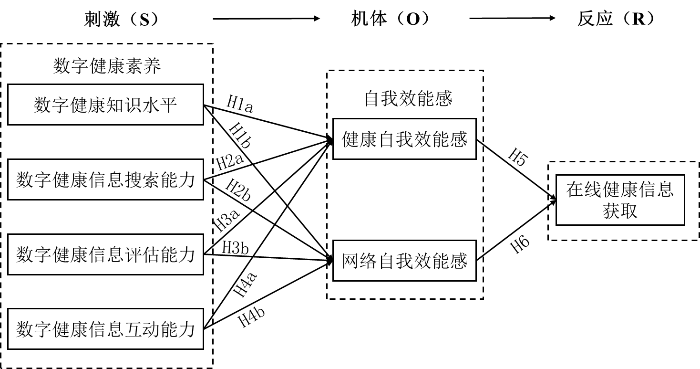
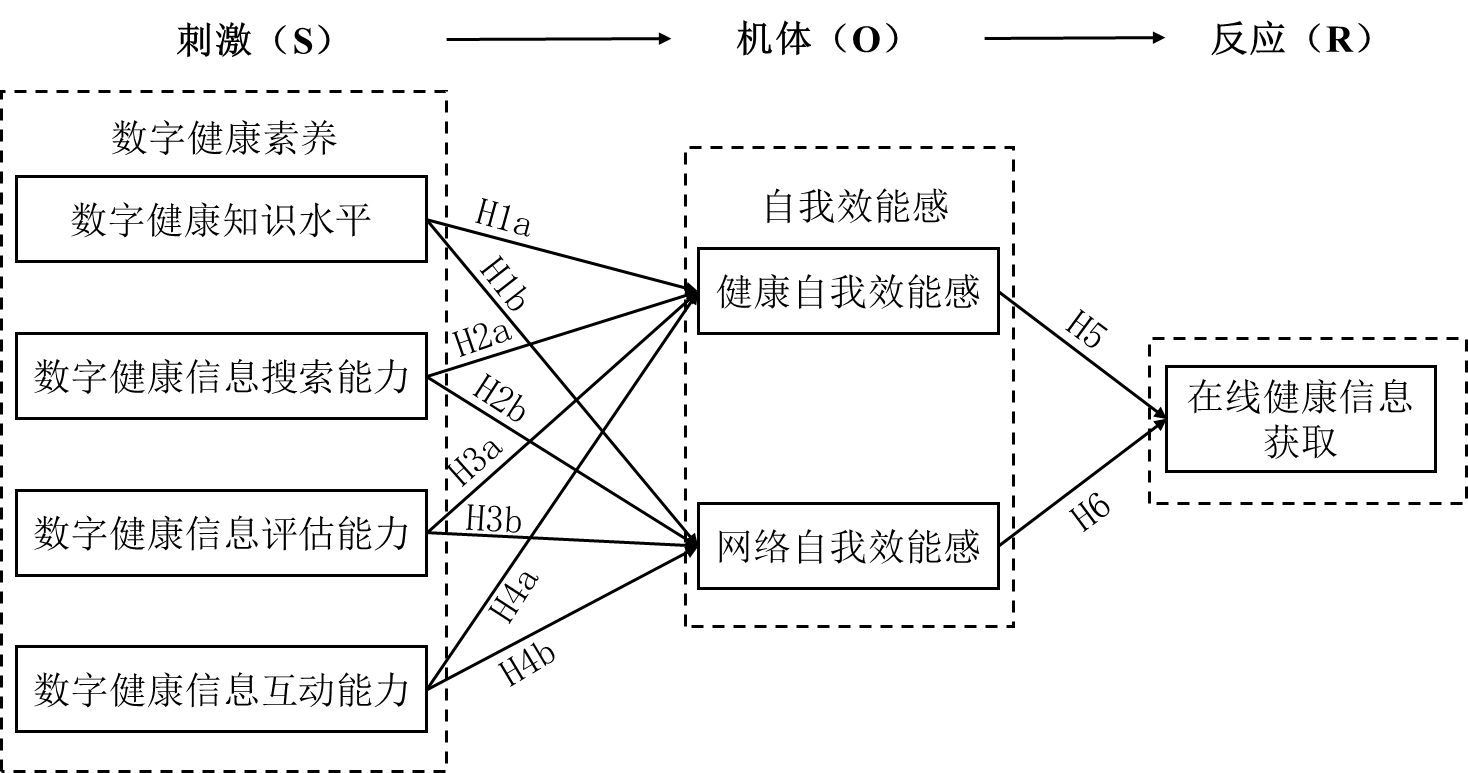
[目的/意义] 针对网络健康信息数量激增、质量差异显著与大学生健康信息需求持续增长的问题,探索数字健康素养促进大学生在线健康信息获取的作用机制,揭示影响大学生在线健康信息获取的内在路径,旨在帮助大学生高效获取健康信息,为优化在线信息平台的健康信息服务提供参考。[方法/过程] 借鉴KSAVE模型和TMeHL框架,从知识与技能两个层面对数字健康素养进行维度划分,将其细化为数字健康知识水平、数字健康信息搜索能力、数字健康信息评估能力和数字健康信息互动能力4个维度。在此基础上,结合S-O-R理论框架,并引入自我效能理论,构建数字健康素养影响大学生在线健康信息获取的理论模型。采用问卷调查法收集数据,共收集到319份有效问卷数据,并利用结构方程模型检验研究假设。[结果/结论] 结果发现,技能层面数字健康素养(数字健康信息搜索能力、数字健康信息评估能力和数字健康信息互动能力)均能显著提升大学生的健康自我效能感和网络自我效能感,并进一步促进其对在线健康信息的获取。相反,数字健康知识水平对大学生健康自我效能感和网络自我效能感的作用路径均不显著,无法通过增强其自我效能感促进在线健康信息获取。
曹高辉 , 李园园 , 董焕晴 . 数字健康素养对大学生在线健康信息获取的影响研究[J]. 知识管理论坛, 2026 , 11(4) : 295 -308 . DOI: 10.13266/j.issn.2095-5472.2026.025
[Purpose/Significance] In response to the rapid growth of online health information, significant variations in its quality, and the rising health information needs among university students, this study explores the mechanism of digital health literacy in improving college students' online health information acquisition. It aims to reveal the underlying pathways influencing online health information acquisition, thereby helping students access health information more effectively and providing a reference for optimizing health information services on online platforms. [Method/Process] Drawing upon the KSAVE model and the TMeHL framework, this study conceptualized digital health literacy from the two dimensions of knowledge and skills, and further operationalized it into four dimensions: digital health knowledge level, digital health information search ability, digital health information evaluation ability, and digital health information interaction ability. Based on this conceptualization, a theoretical model was developed to examine the influence of digital health literacy on university students' online health information acquisition by integrating the S-O-R theoretical framework with self-efficacy theory. Data were collected through questionnaire surveys, yielding 319 valid responses. Structural equation modeling was employed to test the proposed hypotheses. [Result/Conclusion] The results reveal that digital health literacy at the skill level, including digital health information search ability, digital health information evaluation ability, and digital health information interaction ability, significantly enhances university students' health self-efficacy and Internet self-efficacy, thereby further promoting their online health information acquisition. In contrast, the effects of digital health knowledge level on both health self-efficacy and Internet self-efficacy are not significant, suggesting that digital health knowledge level does not facilitate online health information acquisition through the enhancement of self-efficacy.
表1 问卷变量及测量项Table 1 Questionnaire variables and measurement items |
| 变量 | 编号 | 测量题项 | 参考文献 |
|---|---|---|---|
| 数字健康知识水平 | DHK1 | 我熟悉康复相关知识 | A. Karnoe等[63] |
| DHK2 | 我熟悉脾脏相关知识 | ||
| DHK3 | 我熟悉医用呼吸机(呼吸器)相关知识 | ||
| DHK4 | 我熟悉孤独症相关知识 | ||
| 数字健康信息搜索能力 | DHS1 | 我能够用自己的话总结从互联网上搜索到的基本健康信息 | S. R. Paige等[15] |
| DHS2 | 我知道如何在互联网上搜索到基本的健康信息 | ||
| DHS3 | 我能够在互联网上准确描述自己健康信息需求 | ||
| DHS4 | 我有能力告诉别人如何在互联网上搜索到基本的健康信息 | ||
| 数字健康信息评估能力 | DHE1 | 我能辨别互联网上的健康信息发布者是否可靠 | S. R. Paige等[15] |
| DHE2 | 我能识别互联网上的虚假健康信息 | ||
| DHE3 | 我能判断健康网站是否安全可靠,以分享我的个人健康信息 | ||
| DHE4 | 我知道如何评估分享健康信息的互联网用户的可信度 | ||
| 数字健康信息互动能力 | DHI1 | 我可以在互联网上实现我的健康信息目标,同时帮助其他用户实现他们的目标 | S. R. Paige等[15] |
| DHI2 | 我有能力与多个用户同时在互联网上讨论健康话题 | ||
| DHI3 | 我能够识别出互联网上健康对话的情感基调 | ||
| DHI4 | 我有能力在互联网上为健康对话做出贡献 | ||
| DHI5 | 我有能力与分享健康信息的其他互联网用户建立个人联系 | ||
| 健康自我效能感 | HSE1 | 我相信我能对自己的健康产生积极影响 | Y. L. Lee等[64] |
| HSE2 | 我已经设定了一些明确的目标来改善我的健康状况 | ||
| HSE3 | 我已经能够实现我为自己设定的改善健康状况的目标 | ||
| HSE4 | 我正在积极努力地改善我的健康状况 | ||
| HSE5 | 我觉得我可以控制自己学习健康知识的方式和内容 | ||
| 网络自我效能感 | ISE1 | 我有信心理解与互联网硬件相关的术语或词语 | M. S. Eastin等[49] |
| ISE2 | 我有信心理解与互联网软件相关的术语或词语 | ||
| ISE3 | 我有信心描述出互联网硬件的功能 | ||
| ISE4 | 我有信心解决互联网问题 | ||
| ISE5 | 我有信心解释为什么某个任务不能在互联网上运行 | ||
| 在线健康信息获取 | OHIA1 | 我对我获取到的健康信息感到满意 | Y. Chen等[65] N. J. Belkin等[66] S. Joo等[67] 吴丹等[45] |
| OHIA2 | 我对我获取到的健康信息充满信心 | ||
| OHIA3 | 我认为我获取到的健康信息是可靠的 | ||
| OHIA4 | 我认为我获取到的健康信息是符合我的需求的 | ||
| OHIA5 | 我认为我获取到的健康信息可以帮助我进行健康决策 |
表2 样本基本情况Table 2 Basic information of the sample |
| 项目 | 类别 | 人数/人 | 百分比/% |
|---|---|---|---|
| 性别 | 男 | 134 | 42.0 |
| 女 | 185 | 58.0 | |
| 年龄/岁 | 18以下 | 2 | 0.6 |
| 18—25 | 296 | 92.8 | |
| 26—30 | 16 | 5.0 | |
| 30以上 | 5 | 1.6 | |
| 学历 | 大学专科 | 4 | 1.3 |
| 大学本科 | 186 | 58.3 | |
| 硕士研究生 | 112 | 35.1 | |
| 博士研究生 | 17 | 5.3 | |
| 健康状况 | 较差 | 4 | 1.3 |
| 一般 | 101 | 31.7 | |
| 较好 | 159 | 49.8 | |
| 非常好 | 55 | 17.2 | |
| 在线健康信息获取频率 | 每半年至少一次 | 24 | 7.5 |
| 每季至少一次 | 41 | 12.9 | |
| 每月至少一次 | 40 | 12.5 | |
| 每周至少一次 | 139 | 43.6 | |
| 每天至少一次 | 75 | 23.5 |
表3 信度和收敛效度Table 3 Reliability and convergent validity |
| 构念 | 题项 | 因子载荷 | Cronbach's α | CR | AVE |
|---|---|---|---|---|---|
| 数字健康知识水平 (DHK) | DHK1 | 0.769 | 0.815 | 0.817 | 0.529 |
| DHK2 | 0.753 | ||||
| DHK3 | 0.729 | ||||
| DHK4 | 0.652 | ||||
| 数字健康信息搜索能力 (DHS) | DHS1 | 0.720 | 0.823 | 0.826 | 0.543 |
| DHS2 | 0.767 | ||||
| DHS3 | 0.723 | ||||
| DHS4 | 0.737 | ||||
| 数字健康信息评估能力 (DHE) | DHE1 | 0.812 | 0.869 | 0.871 | 0.629 |
| DHE2 | 0.857 | ||||
| DHE3 | 0.733 | ||||
| DHE4 | 0.764 | ||||
| 数字健康信息互动能力 (DHI) | DHI1 | 0.691 | 0.848 | 0.849 | 0.530 |
| DHI2 | 0.760 | ||||
| DHI3 | 0.699 | ||||
| DHI4 | 0.743 | ||||
| DHI5 | 0.745 | ||||
| 健康自我效能感 (HSE) | HSE1 | 0.689 | 0.846 | 0.848 | 0.527 |
| HSE2 | 0.757 | ||||
| HSE3 | 0.732 | ||||
| HSE4 | 0.775 | ||||
| HSE5 | 0.673 | ||||
| 网络自我效能感 (ISE) | ISE1 | 0.907 | 0.876 | 0.874 | 0.588 |
| ISE2 | 0.910 | ||||
| ISE3 | 0.740 | ||||
| ISE4 | 0.622 | ||||
| ISE5 | 0.596 | ||||
| 在线健康信息获取 (OHIA) | OHIA1 | 0.777 | 0.871 | 0.873 | 0.578 |
| OHIA2 | 0.772 | ||||
| OHIA3 | 0.778 | ||||
| OHIA4 | 0.755 | ||||
| OHIA5 | 0.718 |
表4 区别效度Table 4 Discriminative validity |
| 变量 | DHK | DHS | DHE | DHI | HSE | ISE | OHIA |
|---|---|---|---|---|---|---|---|
| DHK | 0.727 | ||||||
| DHS | 0.387 | 0.737 | |||||
| DHE | 0.333 | 0.464 | 0.793 | ||||
| DHI | 0.392 | 0.501 | 0.499 | 0.728 | |||
| HSE | 0.286 | 0.396 | 0.379 | 0.401 | 0.726 | ||
| ISE | 0.218 | 0.385 | 0.386 | 0.411 | 0.339 | 0.767 | |
| OHIA | 0.321 | 0.593 | 0.448 | 0.514 | 0.432 | 0.429 | 0.760 |
表5 模型适配度检验结果Table 5 Test results of model fit |
| 指标类别 | 适配度指标 | 判断标准 | 指标值 | 适配效果 |
|---|---|---|---|---|
| 绝对适配度指标 | CMIN/DF | 1—3 | 1.871 | 理想 |
| RMSEA | <0.08 | 0.052 | 理想 | |
| GFI | >0.9(理想);>0.8(合理) | 0.857 | 合理 | |
| AGFI | >0.9(理想);>0.8(合理) | 0.831 | 合理 | |
| 增值适配度指标 | CFI | >0.9(理想);>0.8(合理) | 0.922 | 理想 |
| IFI | >0.9(理想);>0.8(合理) | 0.923 | 理想 | |
| TLI | >0.9(理想);>0.8(合理) | 0.914 | 理想 | |
| 简约适配度指标 | PCFI | >0.5 | 0.833 | 理想 |
| PRATIO | >0.5 | 0.903 | 理想 |
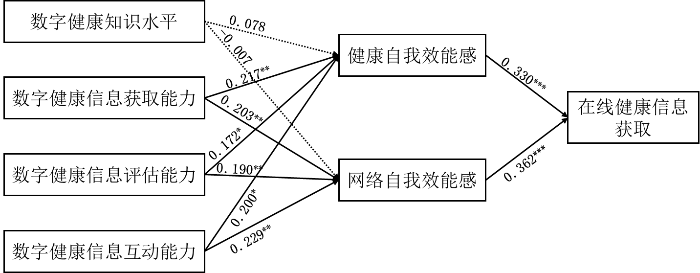
图2 模型路径分析结果 Figure 2 Model path analysis results |
表6 模型假设检验结果Table 6 Model hypothesis test results |
| 假设 | 路径 | 路径系数 | SE | T | P | 检验结果 |
|---|---|---|---|---|---|---|
| H1a | DHK→HSE | 0.078 | 0.045 | 1.125 | 0.261 | 不成立 |
| H1b | DHK→ISE | -0.007 | 0.076 | -0.106 | 0.916 | 不成立 |
| H2a | DHS→HSE | 0.217 | 0.075 | 2.721 | 0.007 | 成立 |
| H2b | DHS→ISE | 0.203 | 0.125 | 2.679 | 0.007 | 成立 |
| H3a | DHE→HSE | 0.172 | 0.050 | 2.322 | 0.020 | 成立 |
| H3b | DHE→ISE | 0.190 | 0.084 | 2.673 | 0.008 | 成立 |
| H4a | DHI→HSE | 0.200 | 0.065 | 2.499 | 0.012 | 成立 |
| H4b | DHI→ISE | 0.229 | 0.109 | 2.984 | 0.003 | 成立 |
| H5 | HSE→OHIA | 0.330 | 0.043 | 5.552 | *** | 成立 |
| H6 | ISE→OHIA | 0.362 | 0.083 | 5.539 | *** | 成立 |
表7 中介效应检验结果Table 7 The mediating effect test results |
| 中介路径 | 路径系数 | Lower | Upper | P | 检验结果 |
|---|---|---|---|---|---|
| DHK→HSE→OHIA | 0.023 | -0.021 | 0.077 | 0.265 | 不成立 |
| DHK→ISE→OHIA | -0.002 | -0.044 | 0.040 | 0.918 | 不成立 |
| DHS→HSE→OHIA | 0.094 | 0.018 | 0.217 | 0.008 | 成立 |
| DHS→ISE→OHIA | 0.080 | 0.024 | 0.159 | 0.008 | 成立 |
| DHE→HSE→OHIA | 0.053 | 0.004 | 0.120 | 0.031 | 成立 |
| DHE→ISE→OHIA | 0.053 | 0.006 | 0.119 | 0.023 | 成立 |
| DHI→HSE→OHIA | 0.074 | 0.015 | 0.163 | 0.012 | 成立 |
| DHI→ISE→OHIA | 0.078 | 0.022 | 0.163 | 0.008 | 成立 |
| [1] |
国家卫生健康委员会. 2024中国卫生健康统计年鉴[M]. 北京: 中国协和医科大学出版社, 2025: 236-237.
National Health Commission of the People's Republic of China. 2024 China Health Statistics Yearbook[M]. Beijing: Peking Union Medical College Press, 2025: 236-237.
|
| [2] |
王锰. 美国网络健康信息用户获取行为的影响因素研究[J]. 信息资源管理学报, 2013, 3(3): 47-58.
|
| [3] |
|
| [4] |
黄素芹, 张乐君, 田侃, 等. 南京市某高校大学生健康信息获取与应用现状的调查分析[J]. 中国卫生统计, 2020, 37(3): 471-474, 480.
|
| [5] |
|
| [6] |
|
| [7] |
|
| [8] |
|
| [9] |
胡宇帆, 何磊, 邓悦, 等. 脑卒中患者健康信息获取行为影响因素及路径分析[J]. 护理管理杂志, 2024, 24(3): 201-205.
|
| [10] |
|
| [11] |
|
| [12] |
|
| [13] |
|
| [14] |
李美茜, 李春玉, 周丽, 等. 国内外数字健康素养评估工具的研究进展[J]. 全科护理, 2022, 20(7): 906-910.
|
| [15] |
|
| [16] |
|
| [17] |
|
| [18] |
|
| [19] |
|
| [20] |
|
| [21] |
|
| [22] |
|
| [23] |
|
| [24] |
|
| [25] |
|
| [26] |
|
| [27] |
|
| [28] |
沈艳丽, 范抒磊, 叶卓俊, 等. 上海市居民健康信息获取意愿的影响因素研究[J]. 中国健康教育, 2023, 39(7): 663-666.
|
| [29] |
陈忆金, 庄家正, 谈大军. 不同情境下老年人对健康信息源的选择差异研究[J]. 图书情报工作, 2020, 64(21): 90-98.
|
| [30] |
|
| [31] |
|
| [32] |
刘立立, 贺冰洁, 陈暐烨, 等. 罕见骨骼疾病患者及家属健康信息获取途径与需求调查[J]. 中华疾病控制杂志, 2020, 24(10): 1219-1223.
|
| [33] |
|
| [34] |
|
| [35] |
王秀红, 沈世玲. 农民工健康信息获取影响因素研究[J]. 图书情报工作, 2020, 64(8): 103-110.
|
| [36] |
|
| [37] |
李楠, 刘申奥, 吉久明. 连续统视域下高校学生智能素养评价体系构建[J]. 情报理论与实践, 2025, 48 (1): 150-159.
|
| [38] |
|
| [39] |
|
| [40] |
袁勤俭, 朱哲慧, 张一涵, 等. 信息系统实证研究的20种重要理论与应用[M]. 北京: 机械工业出版社, 2020: 263-265.
|
| [41] |
班杜拉. 自我效能: 控制的实施[M]. 缪小春, 李凌, 井世浩, 等译. 上海: 华东师范大学出版社, 2003: 113-230.
|
| [42] |
曾润喜, 李游. 自我效能感与网络健康信息搜寻关系的元分析[J]. 心理科学进展, 2023, 31(4): 535-551.
|
| [43] |
|
| [44] |
周涛, 刘佳怡, 邓胜利. 基于SOR模型的在线知识社区用户潜水行为研究[J]. 情报杂志, 2022, 41 (7): 160-165, 83.
|
| [45] |
吴丹, 孙国烨. 生成式智能搜索结果可信度研究[J]. 中国图书馆学报, 2023, 49 (6): 51-67.
|
| [46] |
孟玺, 李庆霜, 霍帆帆. 社交媒体用户参与算法风险治理的影响因素研究[J]. 现代情报, 2025, 45 (5): 49-65.
|
| [47] |
|
| [48] |
|
| [49] |
|
| [50] |
王欣欣, 朱珠, 栾伟. 老年人数字健康素养评价指标体系构建研究[J]. 现代预防医学, 2022,49(20): 3747-3752.
|
| [51] |
|
| [52] |
韩正彪, 戚景琳, 王云辉. 用户网络健康信息搜索对健康风险认知偏差的影响——基于CGSS数据的实证研究[J]. 图书与情报, 2023(5): 62-71.
|
| [53] |
姜雪, 李雨佳, 张元哲, 等. 先验知识差异对协同信息搜索和学习效果的影响研究[J]. 图书情报工作, 2022, 66(8): 32-41.
|
| [54] |
袁红, 李秋. 搜索任务和搜索能力对用户探索式搜索行为的影响研究[J]. 图书情报工作, 2015, 59(15): 94-105.
|
| [55] |
赵一鸣, 潘沛, 黄瑶, 等. 组态视角下消费者信息搜索策略对搜索效果的影响研究[J]. 图书情报工作, 2023, 67(10): 93-106.
|
| [56] |
何艺璇, 闫文捷. 谁在社交媒体扩散虚假健康信息?——健康素养与分析性思维的作用[J]. 新闻记者, 2021(7): 72-85.
|
| [57] |
陈旖旎, 周晓英, 岳丽欣, 等. 健康焦虑人群信息行为的类型、特征及影响因素[J]. 图书情报知识, 2024, 41 (5): 89-102.
|
| [58] |
|
| [59] |
|
| [60] |
袁程, 魏晓敏, 武晓宇, 等. 电子健康素养对老年慢性病患者就医行为的影响: 社会支持和自我效能的中介作用[J]. 现代预防医学, 2023, 50 (24): 4475-4479, 4520.
|
| [61] |
|
| [62] |
|
| [63] |
|
| [64] |
|
| [65] |
|
| [66] |
|
| [67] |
|
| [68] |
张敏, 聂瑞, 罗梅芬. 健康素养对用户健康信息在线搜索行为的影响分析[J]. 图书情报工作, 2016, 60(7): 103-109, 138.
|
| [69] |
|
| [70] |
|
| [71] |
|
/
| 〈 |
|
〉 |