撤稿论文与施引文献撤稿风险关联的实证研究
作者贡献声明/Author contributions:
娄 莹:研究思路设计,实验执行与数据收集,数据分析与结果解读,论文撰写;
李梦辉:研究问题提出与设计,论文修改与审核。
|
娄莹,博士研究生 |
收稿日期: 2026-06-14
网络出版日期: 2026-08-31
An Empirical Study of the Association Between Retracted Papers and the Retraction Risk of Citing Publications
|
Lou Ying, Doctoral Candidate |
Received date: 2026-06-14
Online published: 2026-08-31
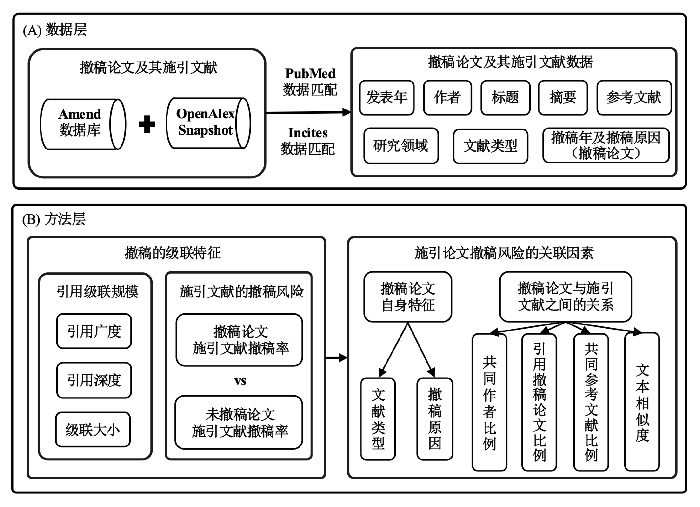
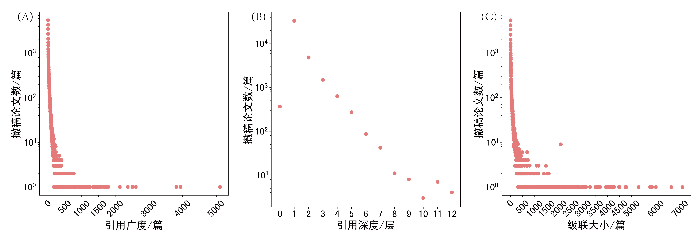
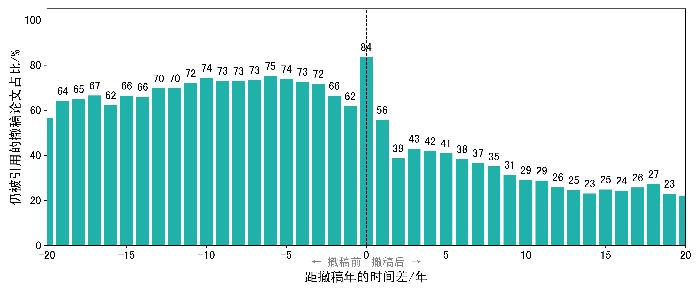
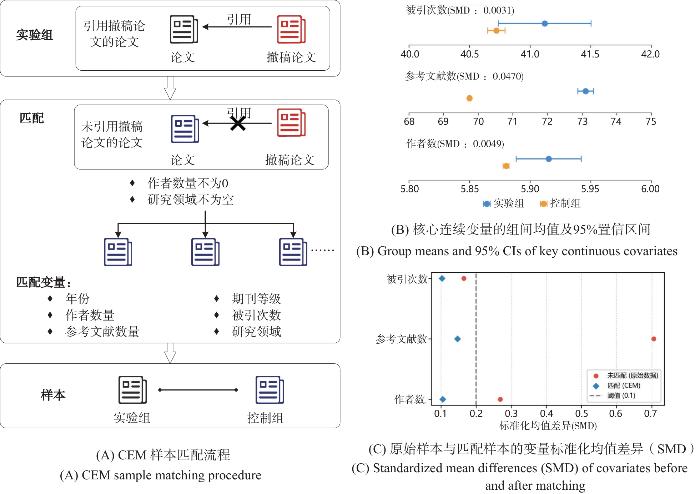
[目的/意义] 撤稿是科学共同体实施自我纠错的重要方式,但撤稿并不意味着相关论文立即退出科学交流,其仍会形成复杂的引用关联。现有研究主要关注撤稿论文产生的影响,对于引用撤稿论文是否与施引文献撤稿风险存在统计关联仍缺乏系统研究。本研究从引用关系视角分析二者之间的统计关联,为撤稿风险识别与预警提供实证参考。[方法/过程] 研究数据以Amend撤稿数据库为核心,结合OpenAlex数据库获取施引文献信息。首先,从引用广度、引用深度和级联规模等方面分析撤稿论文的引用特征;随后,通过构建实验组与对照组分析引用撤稿论文的文献是否具有更高的撤稿风险;进一步结合统计分析与机器学习方法,从撤稿论文自身特征及其与施引文献之间的关系特征两个维度识别影响上述统计关联的关键特征。[结果/结论] 撤稿论文的引用级联呈现出持续时间长、引用层级深及关联范围广等特征,同时,论文在撤稿后仍保持较高可见性。实验组与对照组的比较结果表明引用撤稿论文与施引文献撤稿风险之间存在统计关联,进一步分析发现,临床试验、随机对照试验、案例研究及因论文工厂问题而撤稿的论文,其施引文献具有更高撤稿率。同时,施引文献引用撤稿论文的比例与其撤稿率之间也表现出较强的统计关联。
娄莹 , 李梦辉 . 撤稿论文与施引文献撤稿风险关联的实证研究[J]. 知识管理论坛, 2026 , 11(4) : 400 -412 . DOI: 10.13266/j.issn.2095-5472.2026.033
[Purpose/Significance] Retraction is an important self-correction mechanism of the scientific community. However, retraction does not necessarily mean that the affected articles immediately disappear from scientific communication, as they may continue to generate complex citation links. Existing studies have primarily focused on the impacts of retracted papers, while whether citations to retracted papers are statistically associated with the retraction risk of citing papers remains insufficiently investigated. Therefore, this study examines the statistical association between citations to retracted articles and the retraction risk of citing articles from the perspective of citation relationships, providing empirical evidence for retraction risk identification and early warning. [Method/Process] The data were primarily obtained from the Amend retraction database, combined with citing-paper information retrieved from the OpenAlex database. First, the citation characteristics of retracted articles were analyzed in terms of citation breadth, citation depth, and cascade size. Subsequently, an experimental group and a control group were constructed to examine whether papers citing retracted papers had a higher risk of retraction. Furthermore, statistical analysis and machine learning approaches were combined to identify key features associated with this statistical relationship from two dimensions: the intrinsic characteristics of retracted articles and the relational characteristics between retracted and citing articles. [Result/Conclusion] Retracted articles maintain relatively high visibility after retraction and exhibit citation cascade characteristics, including long persistence, deep citation levels, and broad citation scope within citation networks. Comparisons between the experimental and control groups demonstrate a statistical association between citing retracted articles and the retraction risk of citing articles. Further analysis reveals that citing articles of retracted papers involving clinical trials, randomized controlled trials, case studies, and paper mill-related retractions show higher retraction rates. Moreover, the proportion of retracted articles cited by a citing article exhibits a strong statistical association with the retraction rate of citing articles.
表1 基于撤稿论文文献类型的施引文献撤稿率比较Table 1 Comparison of citing literature retraction rates based on document types of retracted papers |
| 撤稿论文文献类型 | 施引文献中的撤稿论文占比/% | 95% 置信区间/% | 相对风险RR(95%CI) | p值* |
|---|---|---|---|---|
| 系统综述 | 0.61(74/12 133) | [0.49, 0.76] | 参照 | — |
| 临床试验 | 1.19(83/6 978) | [0.96, 1.47] | 1.95 [1.43, 2.66] | *** |
| 随机对照试验 | 1.27(462/36 294) | [1.16, 1.39] | 2.09 [1.63, 2.67] | *** |
| 比较研究 | 1.75(339/19 323) | [1.58, 1.95] | 2.88 [2.24, 3.70] | *** |
| 观察性研究 | 0.81(13/1 614) | [0.47, 1.37] | 1.32 [0.73, 2.38] | ns |
| 案例研究 | 2.08(81/3 900) | [1.67, 2.57] | 3.41 [2.49, 4.66] | *** |
| 评价研究 | 1.44(31/2 151) | [1.02, 2.04] | 2.36 [1.56, 3.58] | ** |
| 实践指南 | 0.26(2/757) | [0.02, 0.76] | 0.22 [0.03, 1.59] | ns |
| 荟萃分析 | 0.36(91/25 533) | [0.29, 0.44] | 0.58 [0.43, 0.79] | ** |
| 验证性研究 | 0.55(7/1 278) | [0.27,1.13] | 0.90 [0.41,1.95] | ns |
|
表2 基于撤稿论文撤稿原因的施引文献撤稿率比较Table 2 Comparison of citing literature retraction rates based on retraction reasons of retracted papers |
| 撤稿论文撤稿原因 | 施引文献中的撤稿论文占比/% | 95%置信区间/% | 相对风险RR(95%CI) | p值* |
|---|---|---|---|---|
| 错误 | 0.65(1 147/177 393) | [0.61, 0.68] | 参照 | — |
| 论文工厂 | 3.01(1 045/34 723) | [2.83, 3.19] | 4.65 [4.28, 5.06] | *** |
| 虚假评审 | 2.91(3 546/121 964) | [2.81, 3.00] | 4.50 [4.21, 4.80] | *** |
| 引用撤稿论文 | 1.64(28/1 706) | [1.14, 2.36] | 2.54 [1.75, 3.68] | *** |
| 学术不端 | 1.56(2 719/174 669) | [1.50, 1.62] | 2.41 [2.25, 2.58] | *** |
| 剽窃 | 1.24(872/70 532) | [1.16, 1.32] | 1.91 [1.75, 2.09] | *** |
| 其他 | 1.14(2 980/262 258) | [1.10, 1.18] | 1.76 [1.64, 1.88] | *** |
|
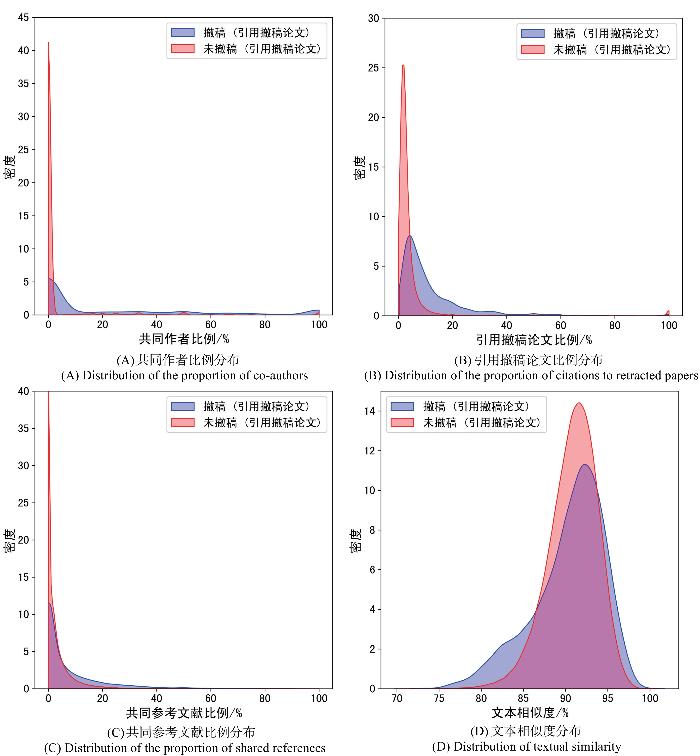
表3 引撤且被撤组与引撤但未撤组关系特征的统计比较Table 3 Statistical comparison of relationship characteristics between the retracted citing literature that were retracted and those that were not retracted |
| 特征 | 引撤且被撤/% | 引撤但未撤/% | Cliff's δ | 效应量 等级 | FDR校正p值 | ||
|---|---|---|---|---|---|---|---|
| 中位数 | 四分位距 | 中位数 | 四分位距 | ||||
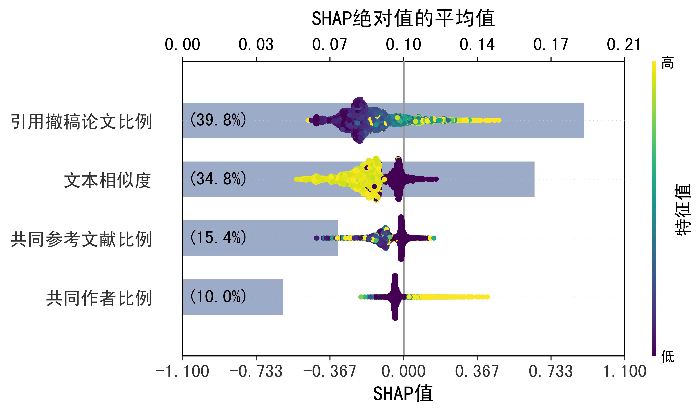
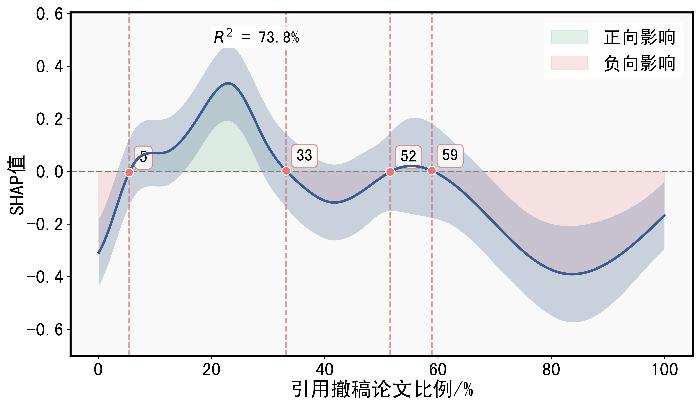
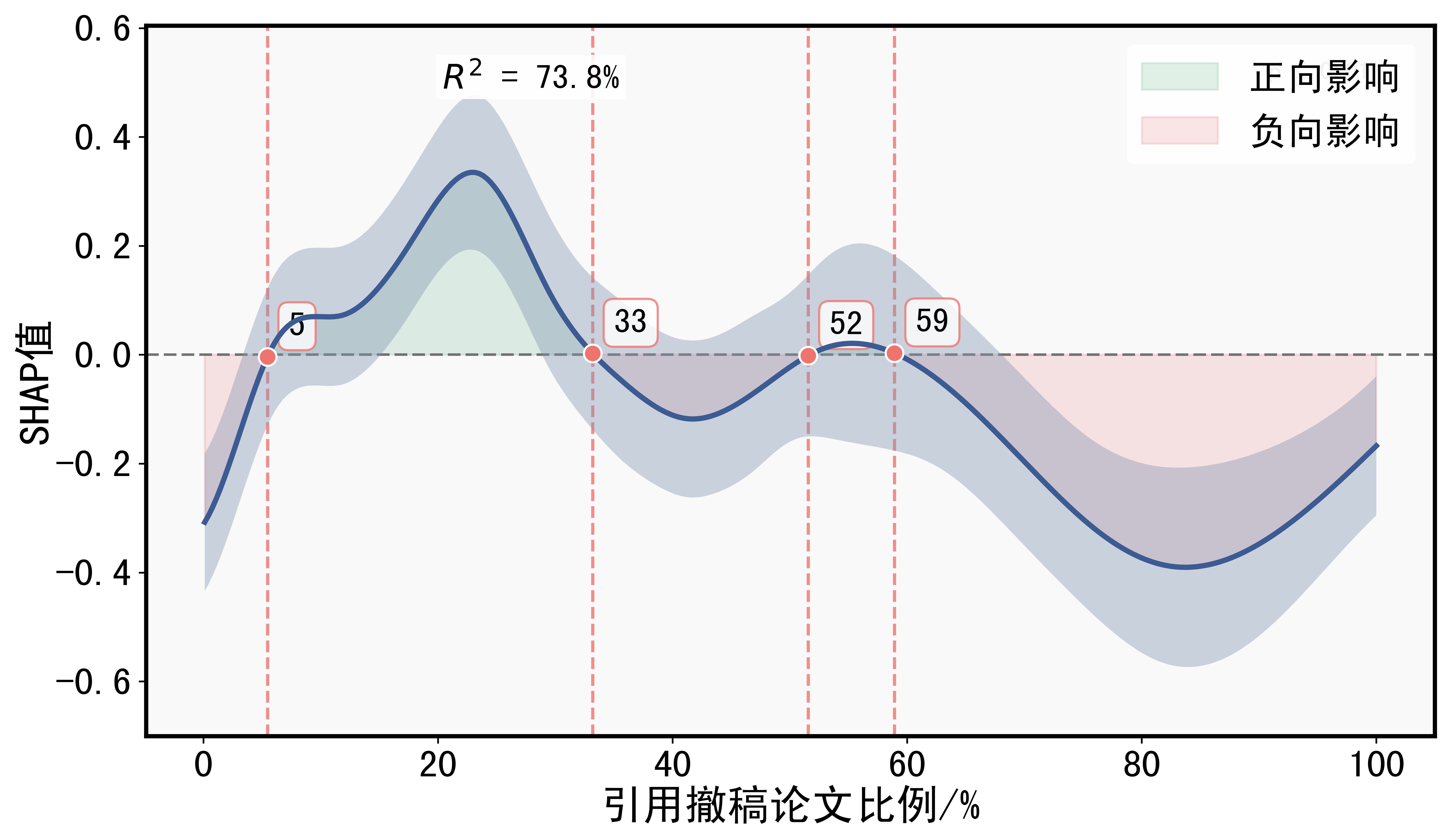
| 引用撤稿论文比例 | 7.14 | 3.92—13.79 | 2.17 | 1.39—3.45 | 0.69 | 大 | <0.001 |
| 共同作者比例 | 0.00 | 0.00—33.33 | 0.00 | 0.00—0.00 | 0.30 | 小 | <0.001 |
| 共同参考文献比例 | 2.04 | 0.00—9.74 | 0.93 | 0.00—3.57 | 0.14 | 可忽略 | <0.001 |
| 文本相似度 | 91.21 | 88.07—93.41 | 91.12 | 89.09—92.90 | -0.01 | 可忽略 | <0.001 |
| [1] |
|
| [2] |
|
| [3] |
|
| [4] |
|
| [5] |
|
| [6] |
|
| [7] |
|
| [8] |
|
| [9] |
|
| [10] |
|
| [11] |
|
| [12] |
|
| [13] |
|
| [14] |
|
| [15] |
|
| [16] |
刘燊, 徐飞. NSC杂志撤销论文引用异常增加现象辨析与治理建议[J]. 中国科技期刊研究, 2022, 33(5): 545-553.
|
| [17] |
文敏. 中文文献数据库中撤销论文的分布规律研究[J]. 中国科技期刊研究, 2016, 27(11): 1151-1155.
|
| [18] |
|
| [19] |
|
| [20] |
|
| [21] |
|
| [22] |
|
| [23] |
|
| [24] |
|
| [25] |
|
| [26] |
|
| [27] |
|
| [28] |
|
| [29] |
|
| [30] |
|
| [31] |
|
| [32] |
马梓越, 马廷灿, 岳名亮, 等. 撤稿论文及其施引论文的计量特征分析[J]. 中国科技期刊研究, 2025, 36(11): 1534-1545.
|
| [33] |
|
| [34] |
冯凌子. 论文撤销风险预警研究: 框架、模型与实证[D]. 北京: 中国科学院大学(中国科学院文献情报中心), 2022.
|
| [35] |
赵显嵩, 陈晓晖, 陆晔, 等. 学术撤稿风险智能预警研究: 基于大语言模型的混合增强检测框架[J]. 中国科技期刊研究, 2025, 36(11): 1478-1486.
|
| [36] |
|
| [37] |
|
| [38] |
|
| [39] |
国家卫生健康委员会办公厅. 国家卫生健康委办公厅关于印发加强医学科研诚信专项治理工作方案的通知[EB/OL].[2026-06-01].
General Office of the National Health Commission of the People's Republic of China. Circular on Issuing the Work Plan for Strengthening the Special Governance of Medical Research Integrity[EB/OL]. [2026-06-01].
|
| [40] |
International Committee of Medical Journal Editors. Recommendations for the conduct, reporting, editing, and publication of scholarly work in medical journals[EB/OL]. [2026-06-01].
|
| [41] |
International Association of Scientific, Technical and Medical Publishers. The STM Integrity Hub[EB/OL]. [2026-06-01].
|
| [42] |
|
/
| 〈 |
|
〉 |