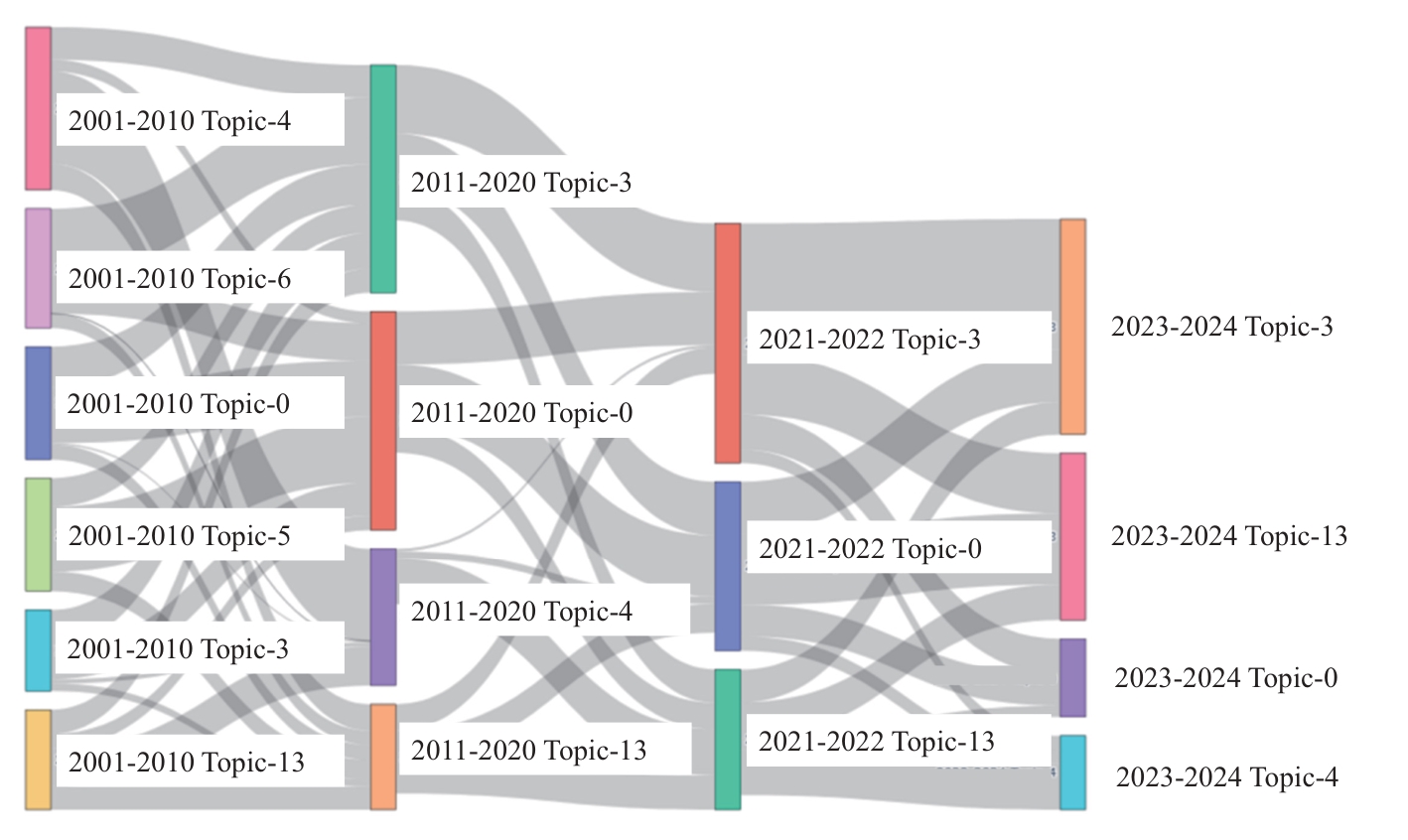
[目的/意义] mRNA治疗作为新一代核酸药物的重要发展方向,其技术发展呈现高度交叉与快速迭代的特征。系统分析mRNA治疗领域的技术发展历程,识别关键技术主题并揭示其动态演化趋势,对于把握该领域的创新前沿与发展态势具有重要的理论价值和现实意义。[方法/过程] 以mRNA治疗领域的专利数据为研究对象,构建结合深度学习算法与大语言模型的技术文本挖掘框架,对mRNA治疗领域的关键技术实体进行自动抽取。在此基础上,结合LDA主题建模方法,对不同时期的专利数据进行主题识别与强度分析,从而揭示主要技术主题的阶段性演化特征与发展路径。[结果/结论] mRNA治疗领域的技术呈现出“基础研究—应用拓展—临床转化”分阶段特征。从技术主题来看,癌症免疫治疗、RNA修饰、药物递送系统、疫苗研发及基因编辑等方向依次成为不同阶段的研究重点。其中,早期研究阶段以提升mRNA稳定性与优化化学修饰策略为核心,中期研究阶段逐渐扩展到递送载体设计与递送效率的提升,而近年来疫苗研发和面向多适应症的广谱应用成为主导方向。
[Purpose/Significance] As a major developmental direction of next-generation nucleic acid therapeutics, mRNA-based therapies are characterized by a high degree of technological convergence and rapid iterative advancement. A systematic analysis of the technological development trajectory in the field of mRNA therapeutics, including the identification of key technological themes and the elucidation of their dynamic evolutionary patterns, is of significant theoretical value and practical relevance for understanding the innovation frontier and overall development trends of this field. [Method/Process] Using patent data from the field of mRNA therapeutics as the object of study, this research constructed a technical text-mining framework that integrated deep learning algorithms with large language models to enable the automated extraction of key technological entities in the mRNA therapeutics domain. On this basis, the Latent Dirichlet Allocation (LDA) topic modeling method was employed to identify topics and analyze their intensities across patent data from different time periods, thereby revealing the stage-wise evolutionary characteristics and developmental trajectories of the major technological themes. [Result/Conclusion] Technological development in the field of mRNA therapeutics exhibits a clear stage-wise progression characterized by “basic research-application expansion-clinical translation.” From the perspective of technological themes, cancer immunotherapy, RNA modification, drug delivery systems, vaccine development, and gene editing successively emerge as focal research areas at different stages. Specifically, the early stage of research primarily focuses on enhancing mRNA stability and optimizing chemical modification strategies; the intermediate stage gradually expands toward the design of delivery carriers and improvements in delivery efficiency; in recent years, vaccine development and broad-spectrum applications targeting multiple indications have become the dominant directions.
 PDF(7198 KB)