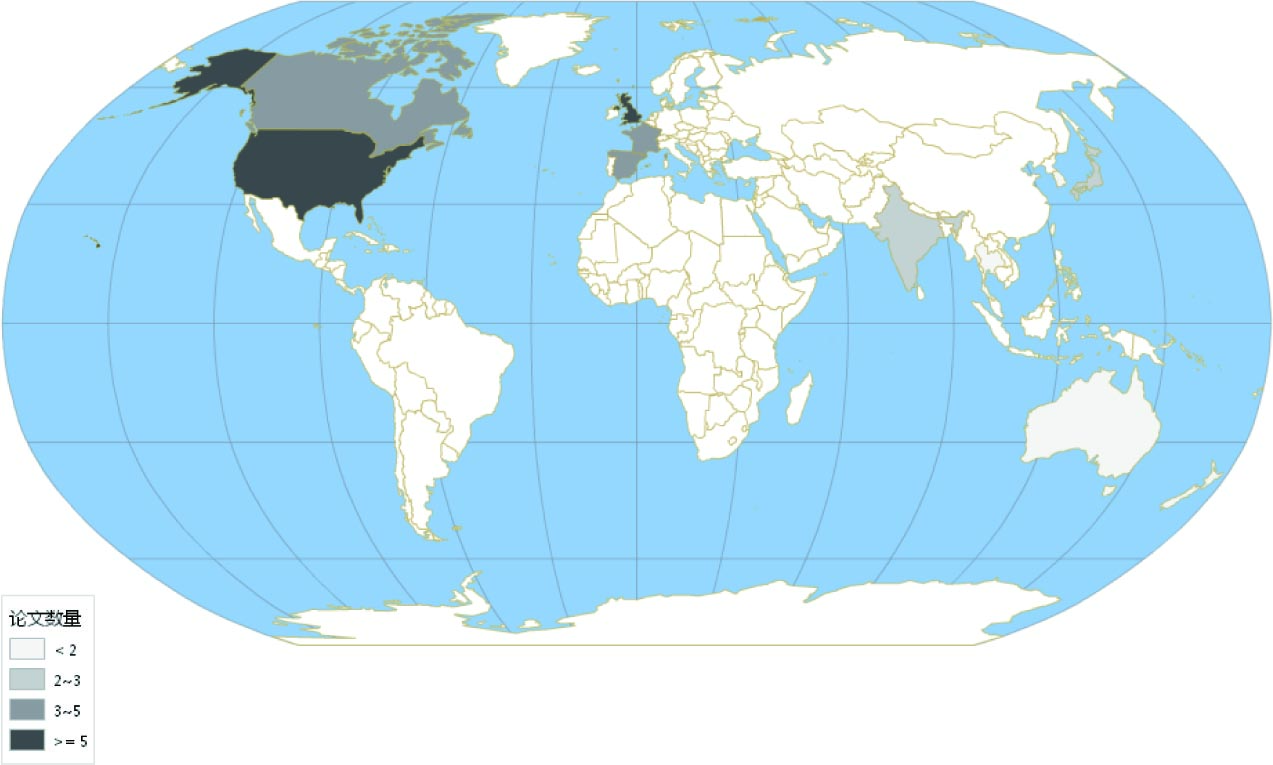
[目的/意义] 了解近15年来中国隐性知识跨国合作的发展特征与态势,发现国内研究的不足与优势所在。[方法/过程] 以Web of Science 中SCI-E、SSCI数据库2001-2015年收录的隐性知识国际合作论文数据为数据源,运用文献计量学方法与指标、社会网络分析技术等,从跨国合作产出、合作结构、合作伙伴、合作影响及合作地位等5个方面对中国隐性知识跨国合作现状进行系统测度与分析。[结果/结论] 中国隐性知识跨国合作研究发展迅速,双边合作占据主导,合作关系日益广泛,合作率不断上升。以与欧美发达国家合作为主,国内研究始终处于网络的边缘位置, 网络影响力与控制力较低。
[Purpose/significance] This paper aims to understand the development characteristics and development trend of China’s tacit knowledge management’s transnational collaboration in recent 15 years, and find the shortage and advantage of China. [Method/process] Selecting the literature on tacit knowledge international collaboration from SCI-E and SSCI database in Web of Science during 2001-2015 as data source, we conducted a systematic analysis and measurement on China’s research status about tacit knowledge transnational scientific collaboration in terms of collaborative output, structure, partners, influence and status through methods of scientometrics and social networks analysis. [Result/conclusion] China’s tacit knowledge transnational collaborative papers present characteristics of rapid development. Bilateral cooperation is in the top and cooperation is becoming more and more widely. The cooperation rate is rising. International collaborative participants are mainly distributed in European and American developed countries. China is always on the verge of a network and the network influence and control power is low.